Last updated November 21, 2026
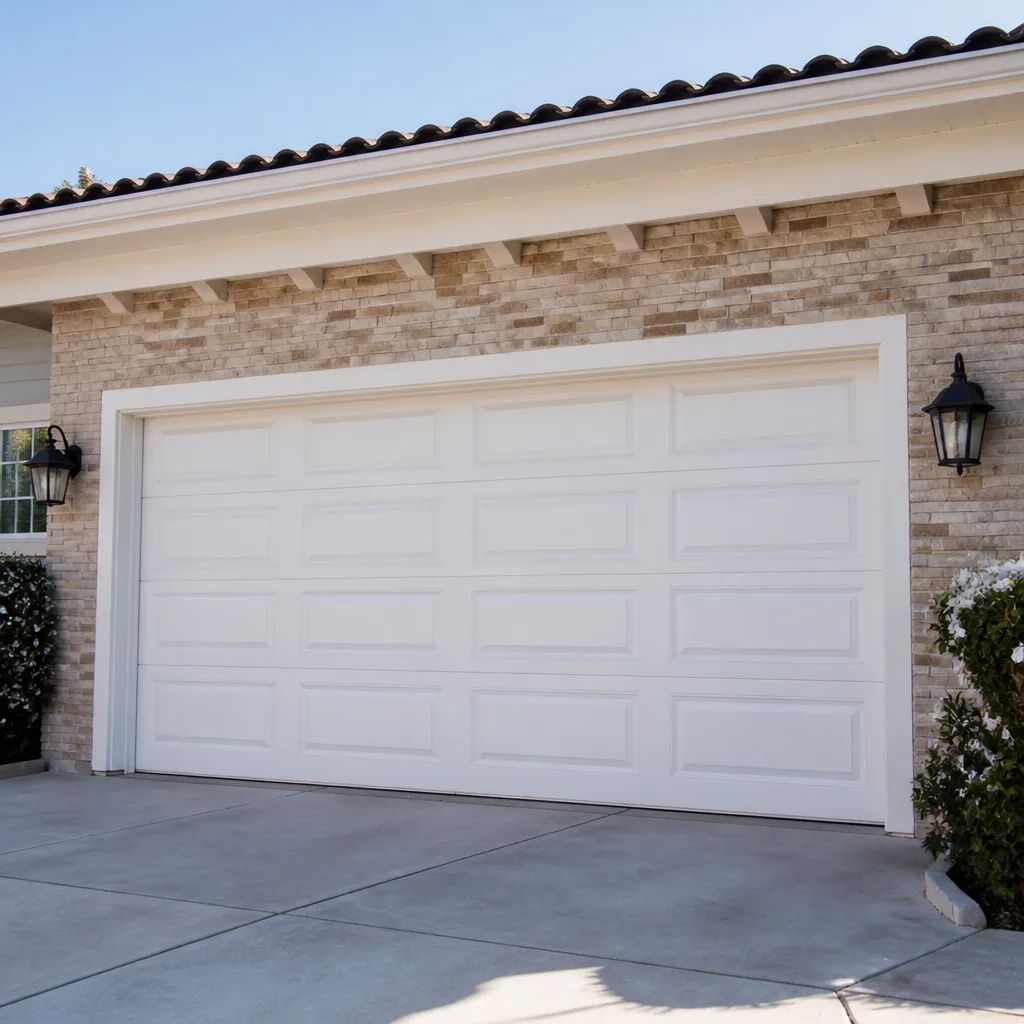 Raised-panel steel
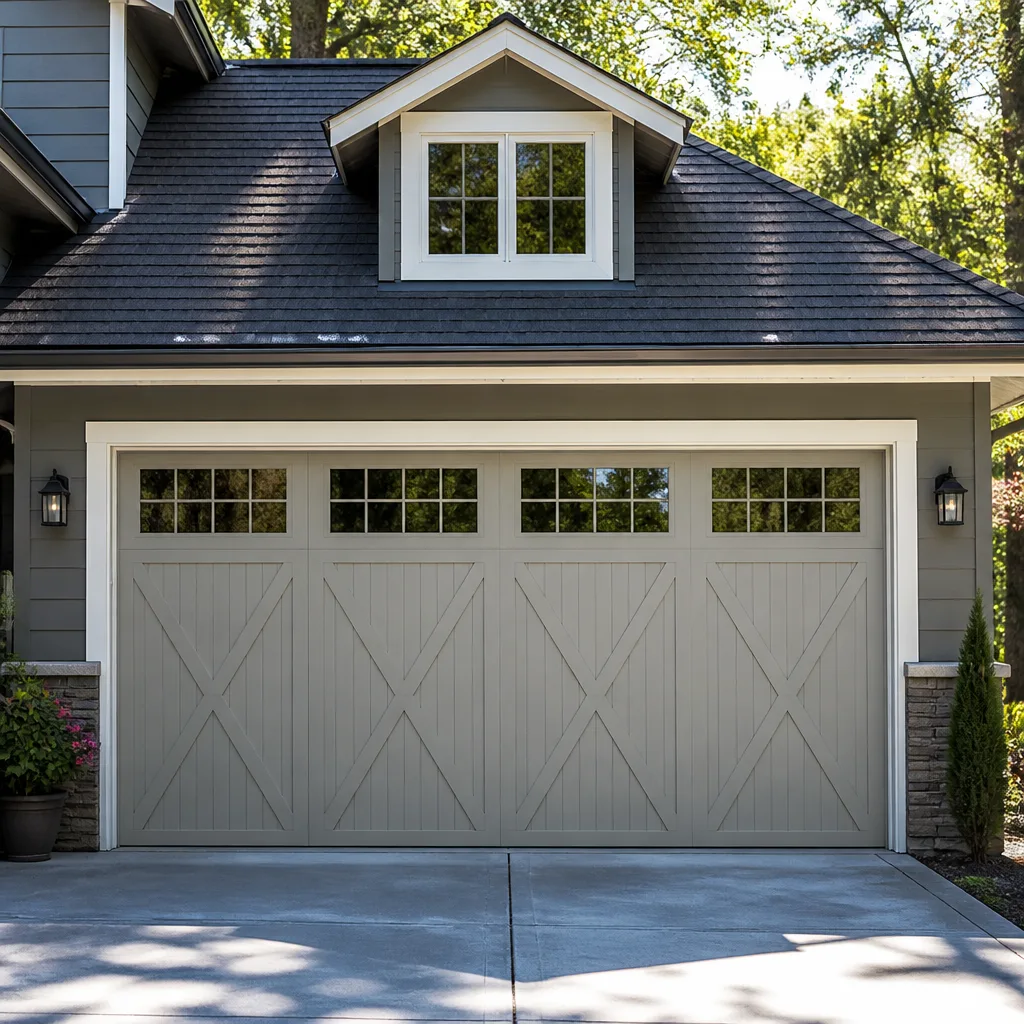 Carriage house
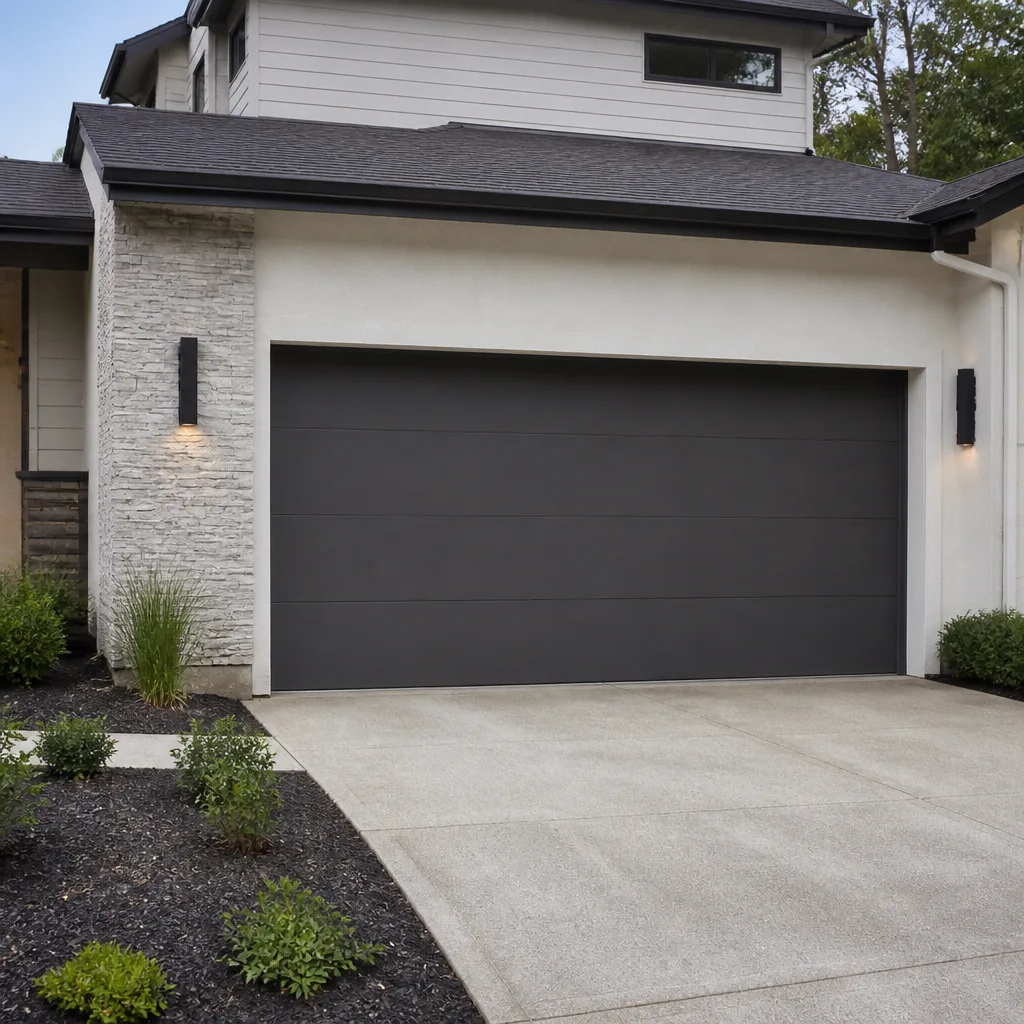 Modern flush
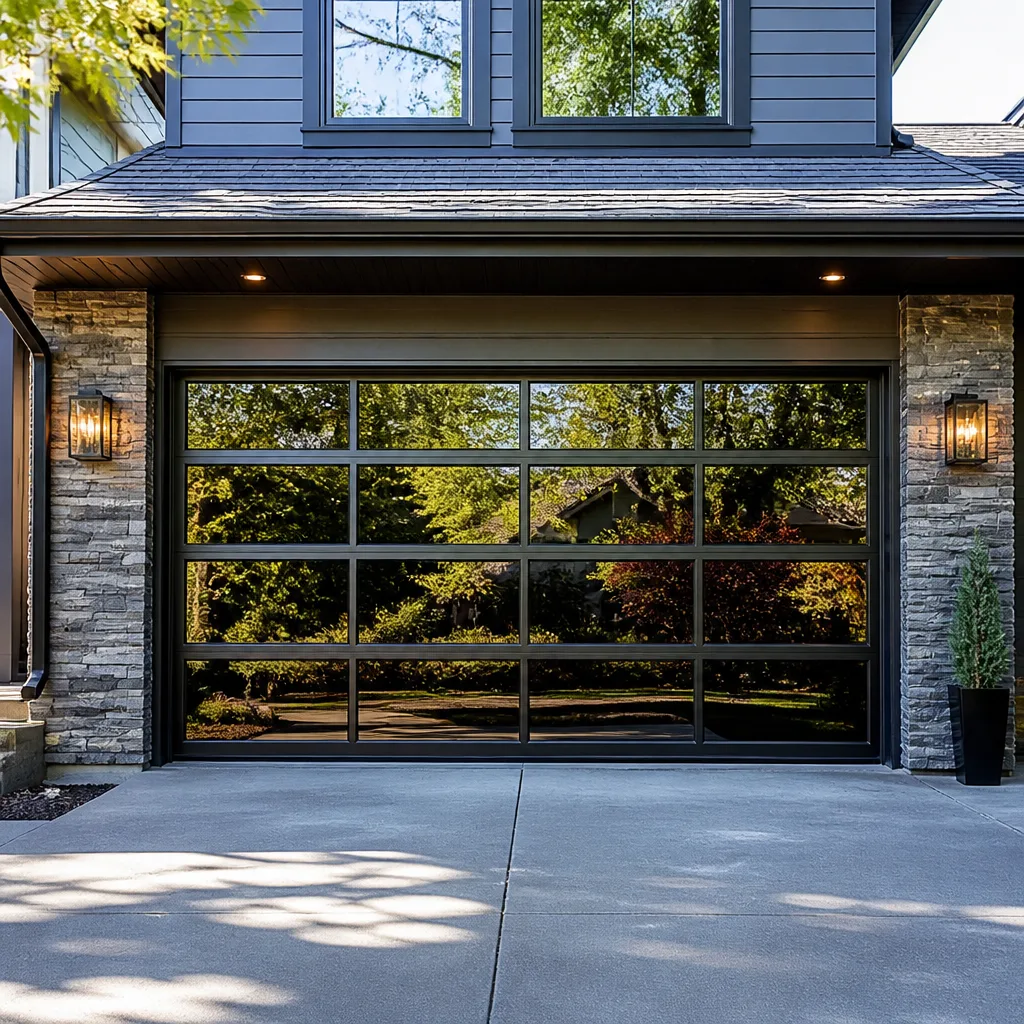 Full-view glass
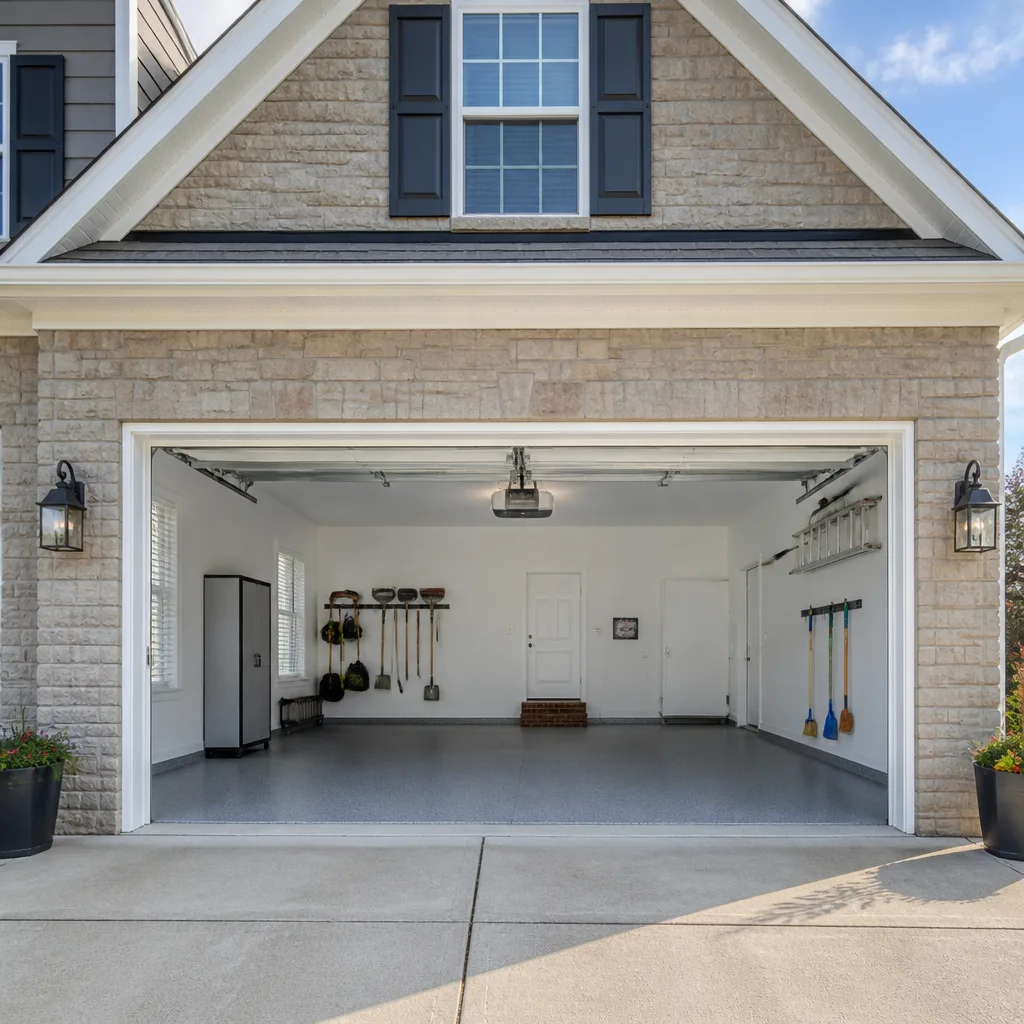 LiftMaster openers
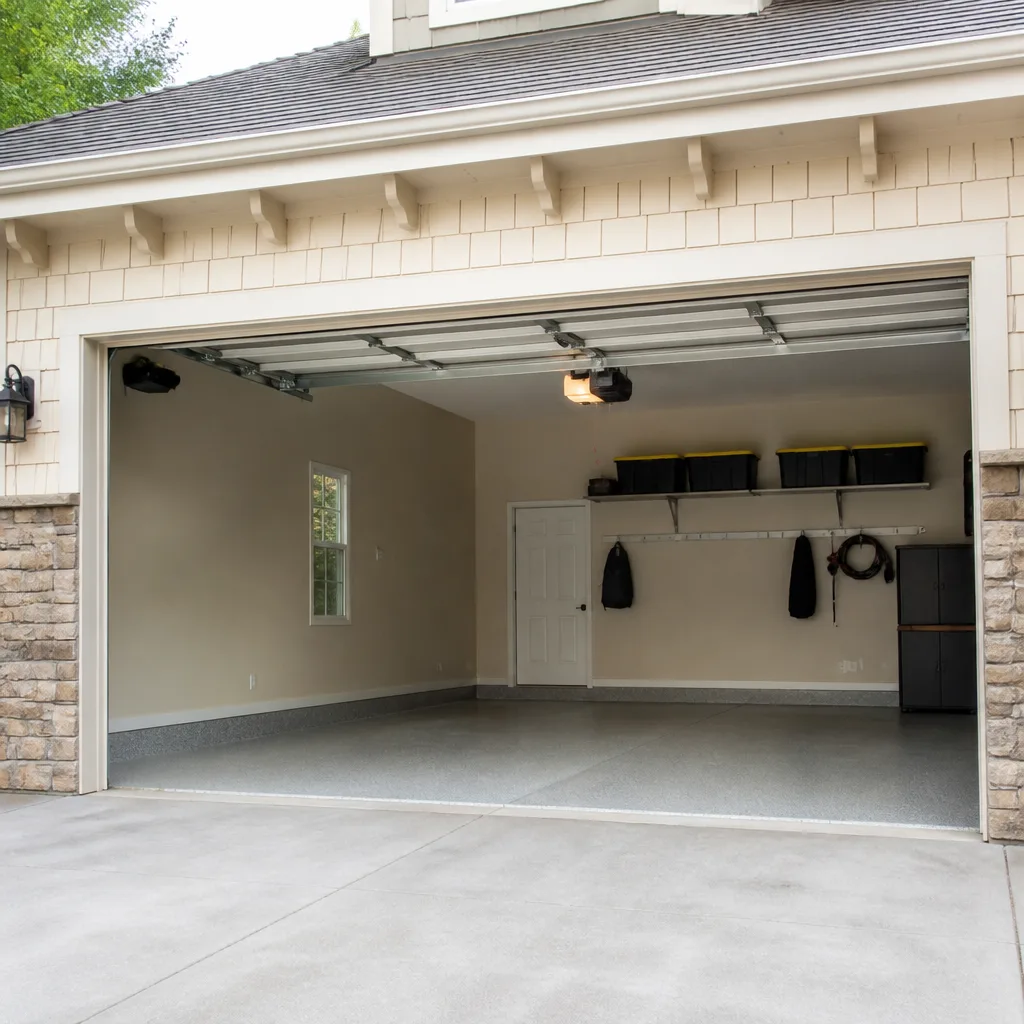 Chamberlain openers
Full 25-point door and opener safety check with every visit - springs, cables, rollers, tracks, and your LiftMaster or Chamberlain opener included
You get a price before we start. It does not change when the pro arrives.
Get your free estimateGarage Door Warning Signs: A Pasadena Homeowner’s Reference Guide
Most garage doors don’t fail without warning. They complain first. The problem is that homeowners tend to treat every complaint the same way: either ignore it entirely, or panic over a squeak that costs almost nothing to sort out. A door that’s visibly off-center by just one inch at the top isn’t a cosmetic issue, though. It usually means one spring is carrying load it was never designed for, and the other one may be weeks from letting go. This guide is built as a diagnostic ladder, from the harmless rattle at the bottom to the situation where you shouldn’t touch the door at all. We’ll walk through sound, sight, and opener behavior, with the local angles that matter here in Pasadena, TX, so you can judge urgency accurately instead of guessing.
Quick Answer
The warning signs that matter most on a garage door are an off-center or sagging panel line, a loud bang followed by a door that won’t lift, any visible fraying on the cables, and a door that reverses unpredictably on its own. If you see a snapped spring or a loose cable, stop operating the door and call a technician. Squeaks, rattles, and slow rollers are worth monitoring but rarely urgent. In Pasadena, TX, humidity-driven rust and a door that binds in summer heat are the two complaints we hear most, and both have clear next steps.
Styles & brands we work with
- Raised-panel steel
- Carriage house
- Modern flush
- Full-view glass
- LiftMaster openers
- Chamberlain openers
Table of Contents
- The Three Severity Tiers of Garage Door Problems
- Sound-Based Diagnostics: What Each Noise Tells You
- Rust Bloom in Pasadena Humidity: Surface Oxidation vs. Structural Corrosion
- Panel Alignment, Gaps, and Off-Center Doors
- Opener Behavior: A Struggling Motor vs. a Failing Motor
- Safety Reversal Failures and Hot-Weather Behavior
- A Practical Timeline for Monitoring and Scheduling
- The Parts That Fail First, and Why
The Three Severity Tiers of Garage Door Problems
Every garage door symptom falls into one of three buckets: monitor it, schedule it, or stop using the door. Getting the tier right is the whole point of this guide. A homeowner who can place their symptom on this ladder avoids both failure modes: the person who ignores a snapped cable for six weeks, and the person who pays for a service call over a dry hinge.
Tier 1 – Low severity, monitor:
- A light squeak at one hinge or roller, usually on the same panel each time
- Cosmetic surface rust on the bottom panel with no flaking or pitting
- Slow, steady closing speed with no change in sound
- A slightly uneven gap along the bottom weather seal
Tier 2 – Medium severity, schedule within roughly 30 days:
- A grinding or rumbling that has gotten louder over several weeks
- Rust bloom spreading across seams, welds, or the hinge plates
- The door pauses or hesitates mid-travel but completes the cycle
- One panel shows a slight crack or separation from the frame
- Rollers that are visibly flat-spotted or worn
Tier 3 – High severity, do not operate the door, call today:
- A loud bang, followed by the door not lifting or lifting a few inches and stopping
- A visible gap in one of the two overhead springs
- A cable that is kinked, loose, hanging off a drum, or frayed
- The door hanging crooked, off-track, or off-center at the top by an inch or more
- The opener runs but the door doesn’t move at all
- Any smoke, burning smell, or scorch mark at the opener motor
Springs are the reason Tier 3 is a hard line. The torsion or extension springs on your door carry hundreds of pounds of stored force, and a broken or slack spring can throw the door down or whip a cable loose. A trained technician handles this with the door in a controlled state. Do not try to lift, prop, or spring the door yourself. Our technicians have up to 10 years of experience with exactly this kind of call, and Pasadena homeowners use that expertise to avoid the worst outcomes.
Sound-Based Diagnostics: What Each Noise Tells You
If you listen carefully, the door tells you which component is failing. The tricky part is that all four failure modes – worn roller, dry hinge, fraying cable, and a spring under improper tension – can sound like “noise” until you know the acoustic difference. Here’s what each one actually sounds like, and what tier it belongs to.
- Worn roller – a low, rumbling growl that travels with the door. The sound rises and falls as the door moves, and it doesn’t stop when the door sits still. The rollers are the metal or nylon wheels that ride the track. A worn roller flattens on one side, so the growl has a rhythmic quality.
- Dry hinge – a short, sharp squeak or chirp at a specific panel. It happens at a consistent point in the travel, usually at the same panel every time, and it disappears when the door sits still. This one is Tier 1 and essentially free to sort out.
- Fraying cable – a scraping or “twanging” sound, often with a sudden change in tension. Cables are the steel wires that connect the springs to the door. A fraying cable is a Tier 3 sign because it can snap without warning and it’s not something to monitor.
- Spring under improper tension – creaking under load, or a bang followed by silence. The creaking happens when the door is opening or closing because the spring is fighting the track. A bang is a break; the door won’t lift after that, and the spring needs to be replaced by a technician.
One more sound that homeowners often misdiagnose: a click at the start of travel. That’s often the opener’s gear, or a reversing sensor, not a failing spring. It’s a common reason people call us about an “emergency” that turns out to be a $100 kind of fix. Given how different the outcomes are, if you can’t place the noise, calling a technician is cheaper than guessing wrong. Our technicians handle a whole range of openers and spring systems, so it’s one visit regardless of which component is complaining.
Rust Bloom in Pasadena Humidity: Surface Oxidation vs. Structural Corrosion
Pasadena summers are hot and humid, and a garage in that climate is a slow rust incubator. The metal closest to the slab – the bottom panel, the hinge plates, the roller shafts – is where you’ll see it first. Not all rust is bad news. The question is whether you’re looking at a surface pattern or a structural failure.
Surface oxidation is a light orange dusting on the painted edge of a panel, or a few rust spots on a hinge face. It rubs away with a cloth. The metal underneath is solid. This is Tier 1 material. Walk out with a flashlight a few times through the year, especially after a run of rainy, humid weeks, and note the locations.
Structural corrosion is a different animal. Look for these signs:
- Rust that blooms along a seam or around a weld, with rough, pitted metal underneath
- Flaking paint and crumbling metal at the bottom edge of the lowest panel
- Rust that has spread sideways from a hinge plate onto the panel itself
- Orange staining trails downward from the top roller area
If you can push a screwdriver tip into the metal or the bottom edge feels soft, that’s structural. It means a panel is compromised, and a compromised panel can crack or shatter when the door goes up. Pasadena doors with ten-plus years of exposure live in this risk range. If you’re seeing widespread bloom, ask for a diagnostic before you keep using the door. If it turns out a panel is genuinely done, the right fix may be a replacement door rather than endless patching, and our team can walk you through which brands and configurations make sense before anything gets ordered.
Panel Alignment, Gaps, and Off-Center Doors
Stand in your driveway and look at the door from about ten feet back. The horizontal lines between panels should be parallel to the floor. The vertical edges should be square to the frame. If one end of the door sits an inch higher than the other, that’s a real problem, and it’s the single sign most homeowners dismiss.
Why does it matter? On a torsion system, two springs share the door’s weight. When one spring weakens, the door rides on the strong spring unevenly, and the panels twist slightly to compensate. That twist shows up as an off-center door at the top. On an extension-spring system, the same symptom appears when one side’s spring has stretched unevenly or a cable has loosened. Either way, the weak side is carrying less load, which means the strong side is carrying more than it was designed for. That’s how one break becomes two.
A few other alignment symptoms worth checking:
- A gap of more than a quarter-inch at one bottom corner when the door is closed
- The door jumping or jerking as it passes one particular height
- A panel that doesn’t quite meet the next one in the middle
- Tracks that are bowed inward at the middle of the run
None of these is a DIY fix. Even loosening a torsion spring to recenter the door is a controlled-release operation that a technician handles with the door at the proper point. If you see the off-center pattern, treat it as Tier 3 and call. If you’re in Pasadena and not sure whether what you’re seeing is alignment or just paint lines, a free estimate costs you nothing and saves you worrying about it. Our team takes a look, tells you whether it’s a spring balance issue or a track issue, and quotes before any work starts.
Opener Behavior: A Struggling Motor vs. a Failing Motor
A door that opens slowly or stops midway can be a motor problem. But it can just as easily be an unbalanced door that’s dragging, which puts the motor at fault in the homeowner’s mind when the real issue is up top. This matters because replacing an opener won’t fix a door that’s out of balance – the new motor will just struggle too.
Here’s how to tell the difference:
- Test the door without the opener. Pull the release cord (usually the red handle on the rail) to disconnect the opener, then lift the door by hand. A balanced door lifts with moderate, even effort from start to finish. A door that’s extremely heavy, or that falls back down on its own, is out of balance. That’s a spring problem, not an opener problem.
- Listen to the motor. A struggling motor that’s fighting an unbalanced door sounds strained but steady – the tone is high and the effort is even. A failing motor makes grinding, clicking, or intermittent noises, and the door may move in short jerks.
- Check the power supply. A wall switch that buzzes, a remote that works only up close, or a reversing sensor with a dirty lens all cause opener “failures” that aren’t motor issues at all.
- Watch for the motor running without the door. If you hear a whirring sound and see nothing move, the chain or belt may have come loose or the carriage is disconnected. That’s a repair, not a replacement.
Our technicians work on LiftMaster, Chamberlain, Genie, Craftsman, and several other opener families, from WiFi-connected units to older mechanical models. If your opener is a LiftMaster and the door’s been slowing down, don’t assume the opener is done for. In our experience, that call often ends with a balance adjustment and a fresh set of rollers, not a new motor. If the opener does need repair or replacement, we diagnose it before recommending anything, simply because the right fix here is about what the door is doing, not what’s easiest to sell.
Safety Reversal Failures and Hot-Weather Behavior
A door that reverses unpredictably is a safety hazard, not an annoyance. This is the one category where we ask homeowners to stop using the door even if it “mostly works.” Every door has a reversal feature: either a safety beam across the bottom of the opening, or an internal force limit that reverses the door when it meets an obstacle. When either fails, the door can close on a person, a pet, or a car.
Two common patterns point to reversal failure:
- The door reverses when nothing is in the way – no object, no car, no person
- The door reverses only in the heat of the afternoon, then works fine at night
The first pattern can be caused by the safety sensors. They’re two small units at the bottom corners, each with a light. If the receiving light is flickering or dark, the beam is interrupted. Misalignment from a bump or a settling slab can throw it off. The second pattern is more subtle and shows up more in places like Pasadena, where the afternoons are hot for months. Warm air, thermal expansion in the door and tracks, and a slightly warped panel can combine so a door that passed the reversal test in winter starts reversing in August. It’s also possible the opener’s force limit has drifted, which is a setting adjustment that a technician makes on the motor itself.
Whether the cause is a sensor or a drifted force limit, this is not a setting to guess at. A door that reverses on the way down and keeps working is exactly the door that can close on someone. Treat unpredictable reversing as Tier 3, stop operating the door, and have it checked. Our team handles both the sensor side and the opener side, so you don’t have to figure out which one is the culprit on your own.
A Practical Timeline for Monitoring and Scheduling
You don’t need to think about your garage door every week. A light seasonal routine is more than enough for most Pasadena homes, and it catches the majority of problems while they’re still cheap to fix.
- Monthly walk-around, five minutes. With the door closed, look at the bottom seal for gaps. With the door open, look at the tracks for bends. Listen for noise while the door cycles once. Note anything new.
- Seasonal check, twice a year. After the wet season, check for new rust bloom and clean up any surface oxidation. Before the hottest stretch, watch for a door that’s binding or reversing on hot afternoons. Check the safety sensor lights at the same time.
- Annual professional inspection. A technician checks spring tension, cable wear, roller condition, and opener force limits. This is when you catch a spring that’s starting to lose tension but hasn’t failed, which is when it’s cheapest to deal with.
- Every five to seven years, expect a spring bill. Most torsion springs last that long under normal use. Pasadena homes close to heavy daily use sometimes see it sooner. If your door sees a lot of cycles, plan for it rather than being surprised by it.
- Any Tier 3 sign, call the same day. Skip the rest of the checklist and call. A snapped spring or a loose cable doesn’t improve with waiting, and operating the door makes the situation worse.
The most underused part of this routine is the annual inspection. A door that “works fine” can have a spring at the edge of its limit or a cable with a lint of fraying that’s only visible up close. Catching it on a scheduled visit beats catching it on a Tuesday morning when your car is trapped.
The Parts That Fail First, and Why
Garage doors fail in a fairly predictable order, and knowing which component goes first helps you read the symptoms. The parts that do most of the work are the ones that give out first.
- Springs. The most load-bearing part on the door. They carry the majority of the door’s weight every time it opens and close. A spring at the end of its life can give off warning signs for days or weeks, or go without much notice at all. That’s why a snapped spring is the Tier 3 assumption when you hear a bang.
- Cables. They connect the spring system to the door and travel over drums. A cable that frays is a hairline problem that becomes sudden. Fraying shows up as fuzz or a loosened strand near the drum. If you see that, stop using the door.
- Rollers. They wear out gradually, usually as flat spots or a slowly growing growl. They’re inexpensive to replace and reduce the load on everything else, so this is a good first fix when a door feels rough.
- Hinges and brackets. They loosen and dry out. Usually a Tier 1 item, but a hinge that finally pulls out of a panel is a bigger repair.
- Panels. They fail in two ways: rust at the bottom edge and impact damage. Rusted bottom panels are the most common panel failure we see around Pasadena. Panels that lose structural integrity are Tier 3 because they can crack or let go when the door is under load.
- The opener. Motors aren’t usually the first thing to fail, despite being the thing homeowners call about most. A lot of “dead opener” calls turn out to be door balance or a sensor. If a motor is genuinely failing, you’ll see grinding or hesitation even on a balanced door.
On the specific brands: LiftMaster and Chamberlain openers are the most common on residential doors in the area, and Craftsman and Genie units show up in homes built or upgraded in recent decades. On the door side, Clopay, Amarr, Wayne Dalton, and Raynor all come through our service calls. We work on the brand that’s already on the door, which is one of the small things that keeps a repair simple.
Common Mistakes to Avoid
- Treating every noise as an emergency. A dry hinge squeaks. It costs almost nothing to sort out, and panicking over it sometimes leads to a bigger recommendation than the door needs. Take a second to place the sound on the ladder first.
- Ignoring an off-center door because it still opens. A door that’s off by an inch at the top is doing real damage every time it runs. Keep using it and the misbalance gets worse, and the strong spring takes the load. Call it.
- Lifting a door with a broken spring by hand. A door with a snapped spring can weigh 150 pounds or more, and the opener is not designed to lift it. Leave it alone. This is the single biggest cause of injuries on garage doors.
- Replacing the opener when the door is out of balance. A new opener on an unbalanced door fights the same weight the old one did. Diagnosis first, then decide. The wrong replacement is the most expensive kind of right answer.
- Waiting on a door that reverses on hot afternoons. In Pasadena’s summer heat, a door that reverses when it shouldn’t is a safety issue, not a quirk. Every cycle is a chance for it to close on a person or a car. Stop using it.
- Assembling a fix from mixed brands without checking the match. A spring kit, roller set, or opener from a mismatched source can create a bad fit and cause a second repair. If the brand on your door is Clopay, Amarr, Wayne Dalton, or Raynor, tell the technician up front.
- Running a rusty bottom panel for years. Surface oxidation is harmless. A rusted-through bottom panel that’s holding on by paint is not. If you can push a screwdriver into the edge, it’s time to have it evaluated.
See the difference
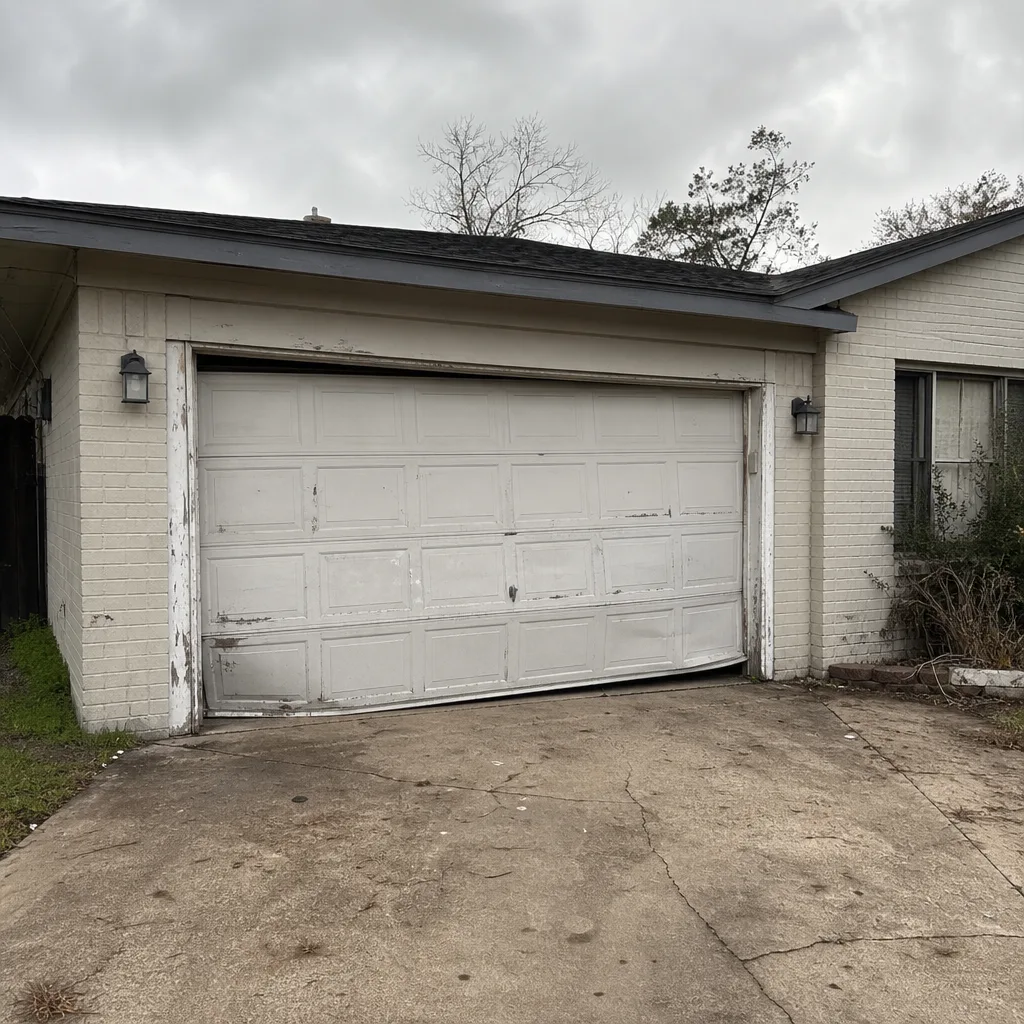 Before
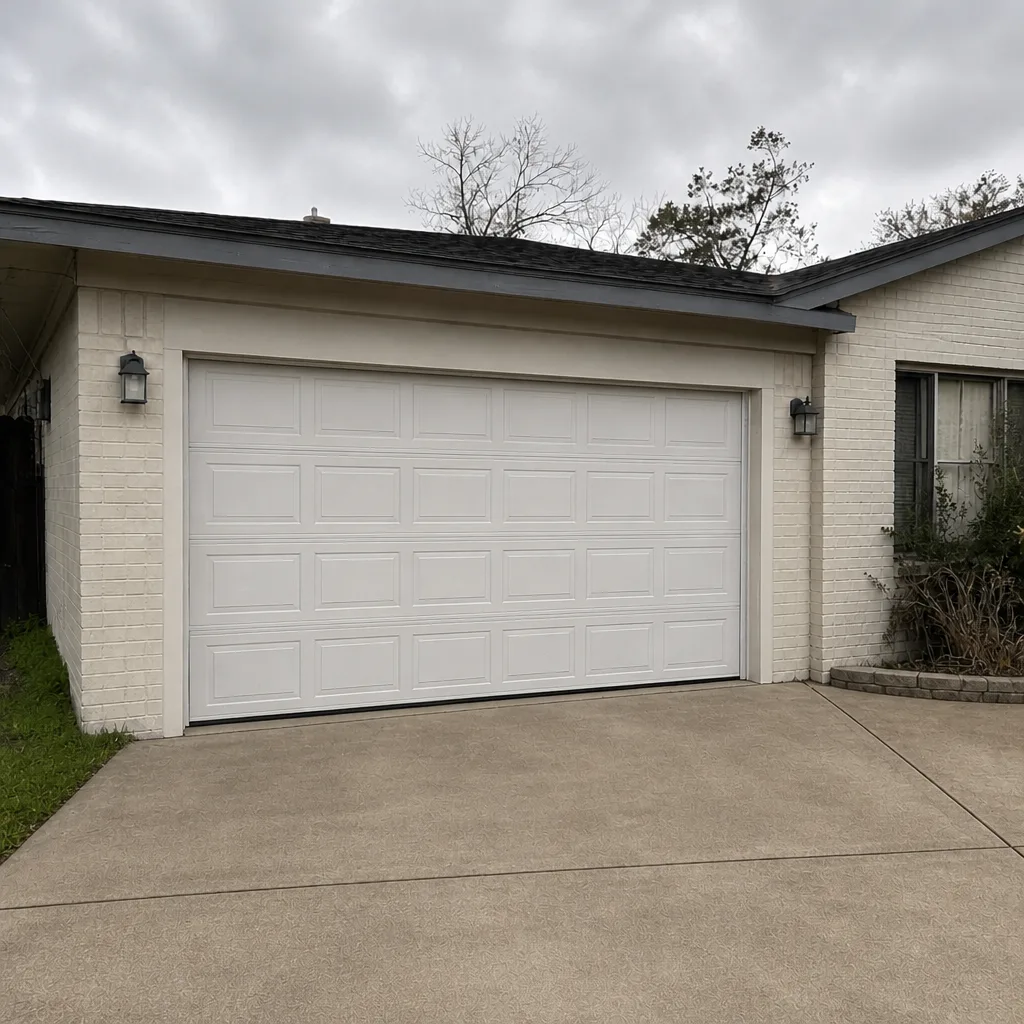 After
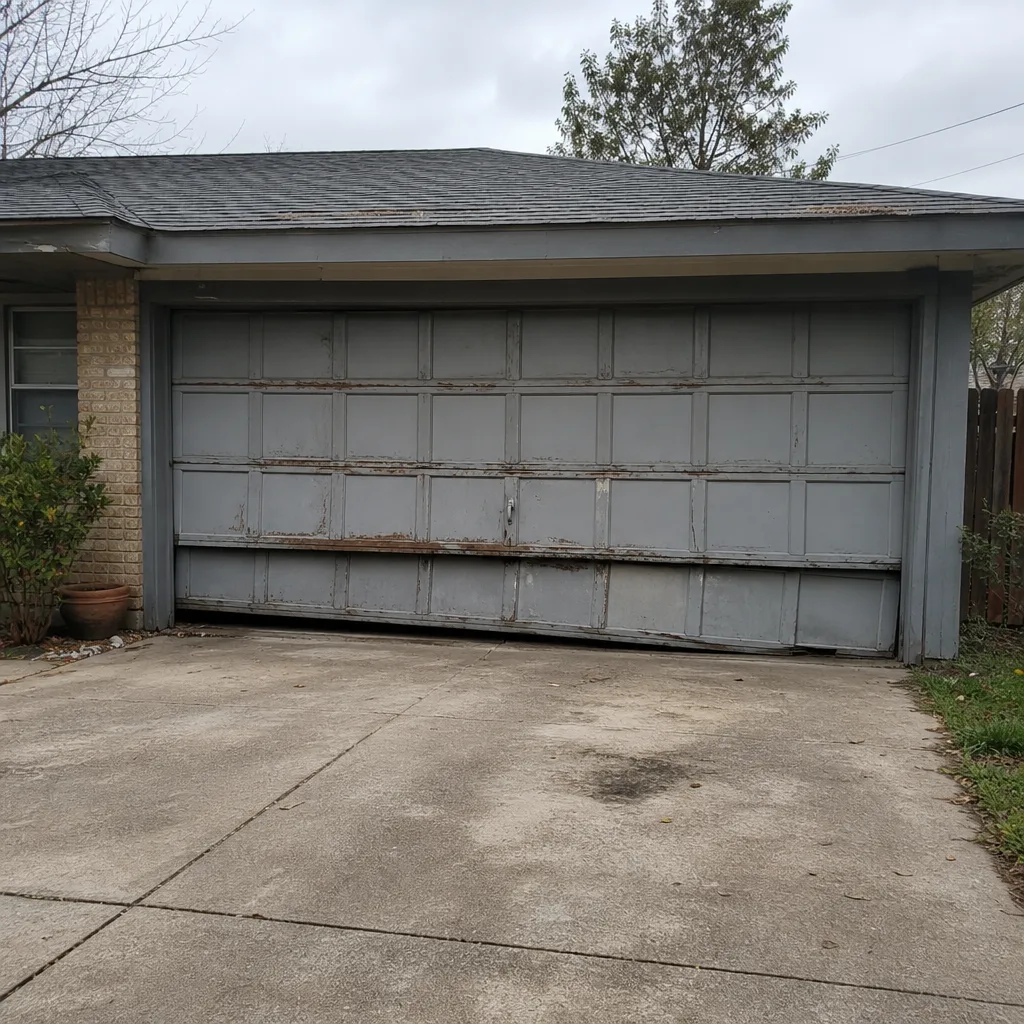 Before
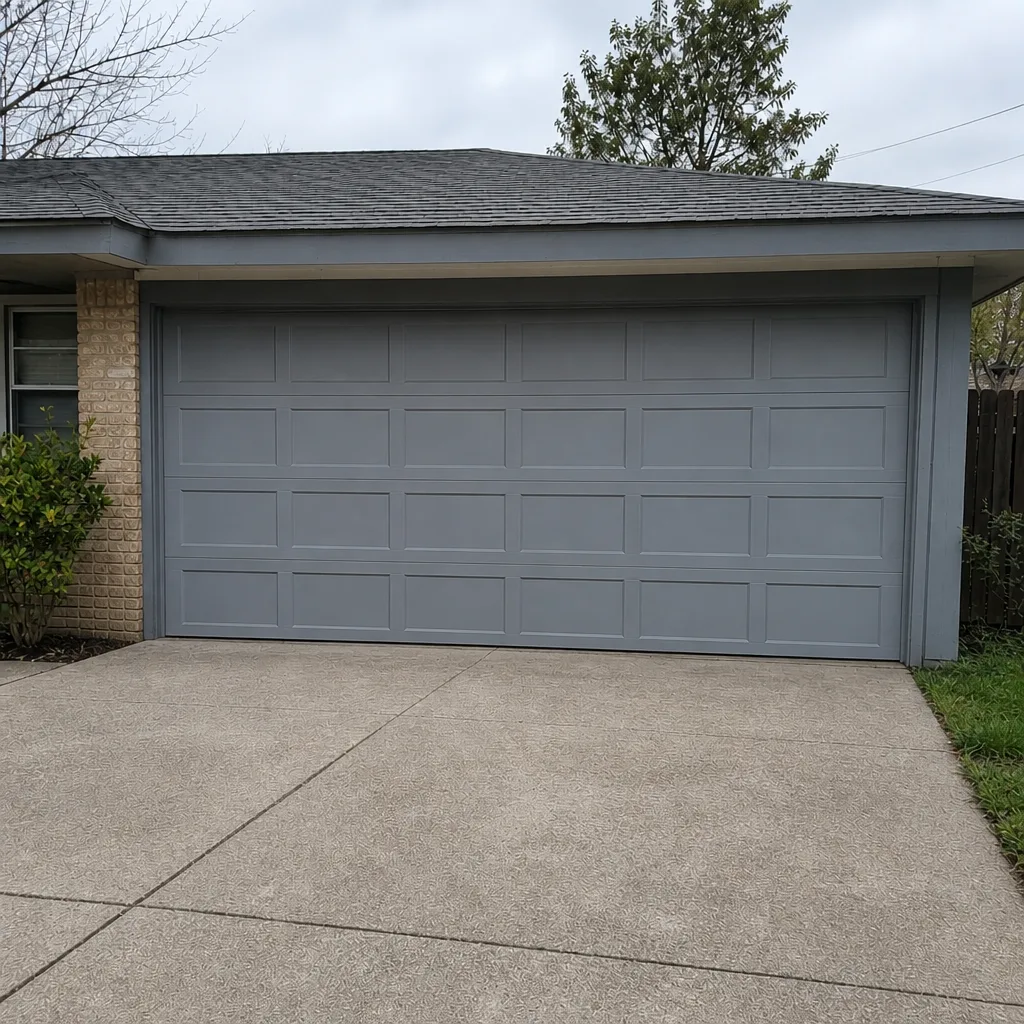 After
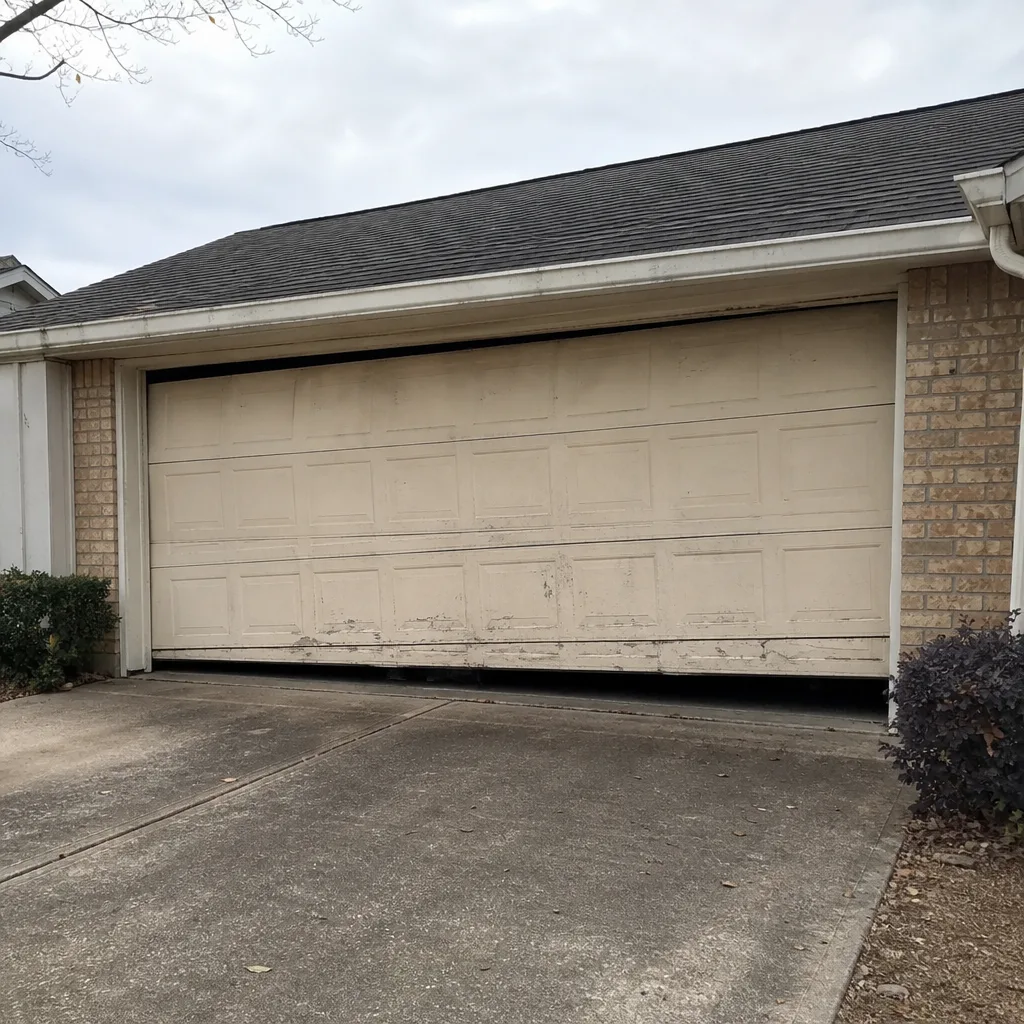 Before
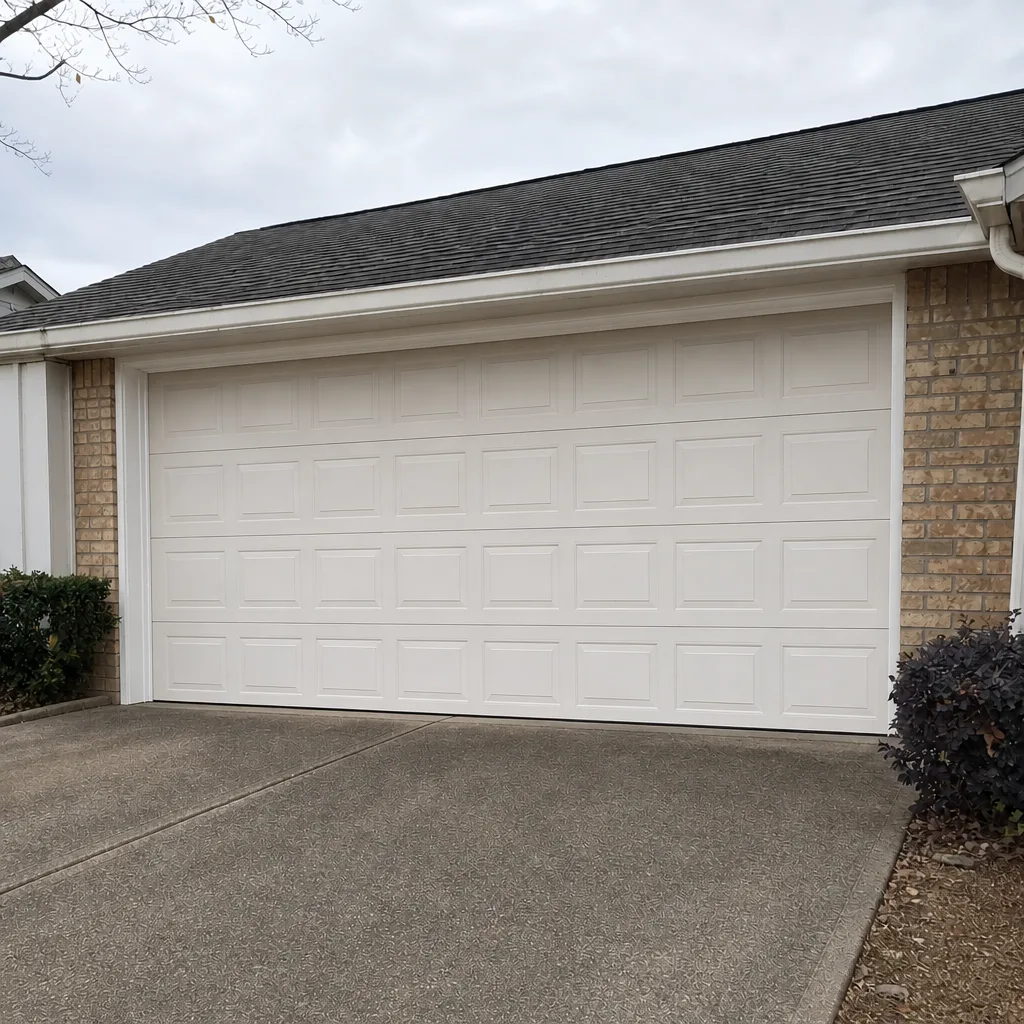 After
When to Call a Professional
Call for any Tier 3 sign, and call without running the door first. That means a bang followed by a door that won’t lift, any visible gap in a spring, any frayed or loose cable, any door hanging off its tracks or off-center at the top, any burning smell at the opener, and any door that reverses on its own. Also call if you’ve been monitoring a Tier 2 sign and it’s been getting worse, or if you’re simply not sure where a symptom sits on the ladder. Pasadena Garage Door Repair Pros offers free estimates in Pasadena, and the technicians we connect you with are experienced across the major opener and door brands – so you get a straight answer about what’s going on. Call (866) 964-5170. Estimates are free, and the price is quoted and agreed before any work starts.
Frequently Asked Questions
A door that sits slightly off-center at the top, an uneven gap at one bottom corner, or a door that feels unusually heavy when disconnected from the opener. A spring rarely fails without some warning, and an unbalanced door is the most common one. If you notice any of these, have it checked. Call (866) 964-5170 for a free estimate.
Yes. A door that reverses without an obstacle in the way is a safety hazard, and the fact that it works at night doesn’t change that. Heat-driven expansion and a drifted opener force limit are the usual causes. Stop operating the door and have it diagnosed. Call (866) 964-5170.
Spring repair is quoted per spring, and the written estimate you receive sets the final price. A matched pair is usually replaced together, so a pair costs roughly double a single spring. Because the exact price depends on the door, the spring type, and what else the technician finds, we don’t guess on the phone. Call (866) 964-5170 for a free estimate specific to your door.
Partly. You can tell whether the door is out of balance by disconnecting the opener and lifting the door by hand, and you can check the safety sensor lights at the bottom corners. Those two tests cover most opener “failures.” Anything involving the motor’s internal force limit or the gearing should go to a technician. Call (866) 964-5170 if you’re unsure.
The local professional we connect you with is licensed and insured as their state requires. If you want specifics about credentials before work starts, ask when you book – a straight answer up front is part of the job. Call (866) 964-5170 for a free estimate.
Surface oxidation wipes away with a cloth and the metal underneath is solid; structural corrosion means pitted, flaking metal that a screwdriver tip can push into. The second is a Tier 3 sign. Pasadena’s humidity makes bottom panels and hinge plates the usual trouble spots, so check them after the wet season. Call (866) 964-5170 if you’re not sure which one you’re looking at.
The Bottom Line
Garage door problems are not all equal, and the point of this guide is to put urgency where it belongs. Squeaks and light rust are Tier 1: monitor them. Grinding, spreading rust, and hesitation are Tier 2: schedule them within a month. A bang, a snapped spring, a loose cable, an off-center door, or a door that reverses on its own is Tier 3: stop using it and call today. The one rule that never bends is that springs and cables under load belong to a trained technician, not a homeowner with a wrench. In Pasadena, hot, humid summers make rust and door balance the two things to keep an eye on. If you can’t place a symptom on the ladder, that’s a reason to call, not to wait.
Call (866) 964-5170 for a free estimate, and we’ll help you figure out which tier your door is in and what comes next.
Written by the team at Pasadena Garage Door Repair Pros.