Last updated November 21, 2026
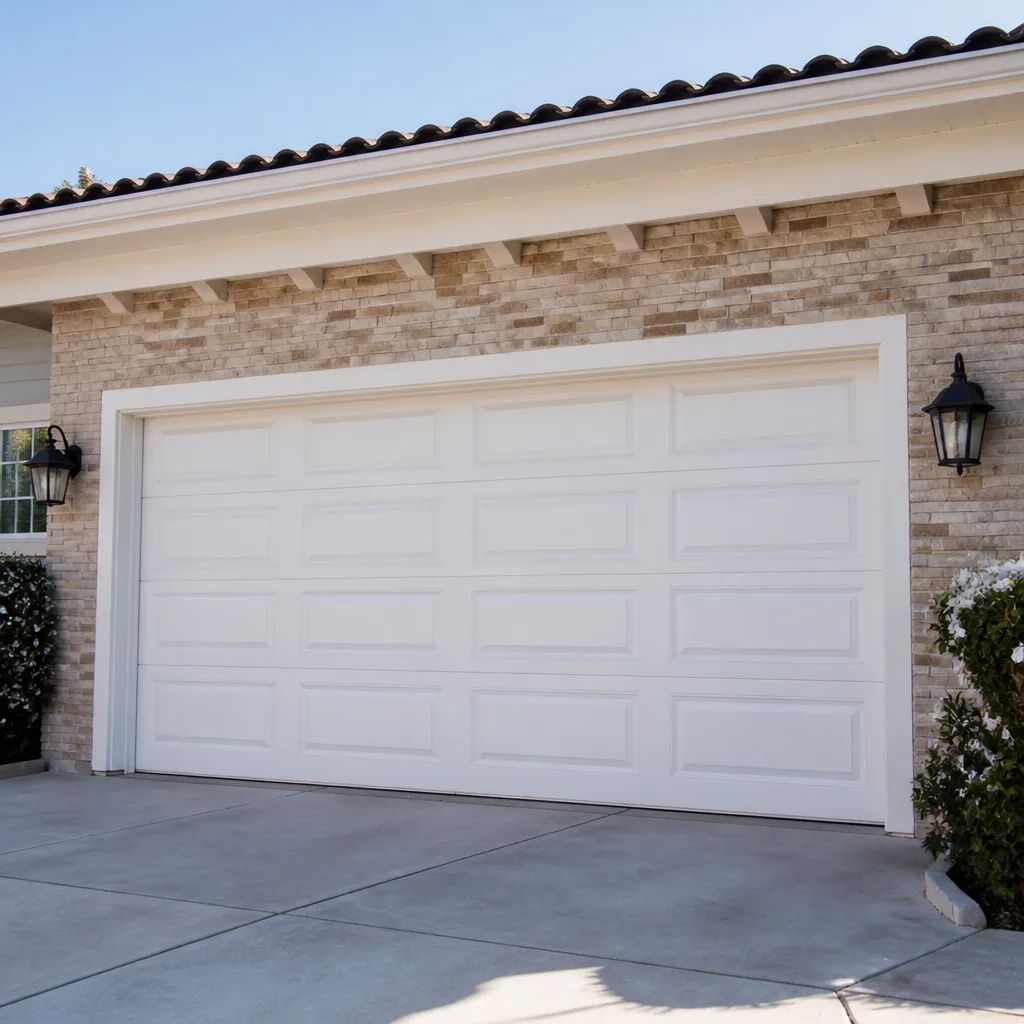 Raised-panel steel
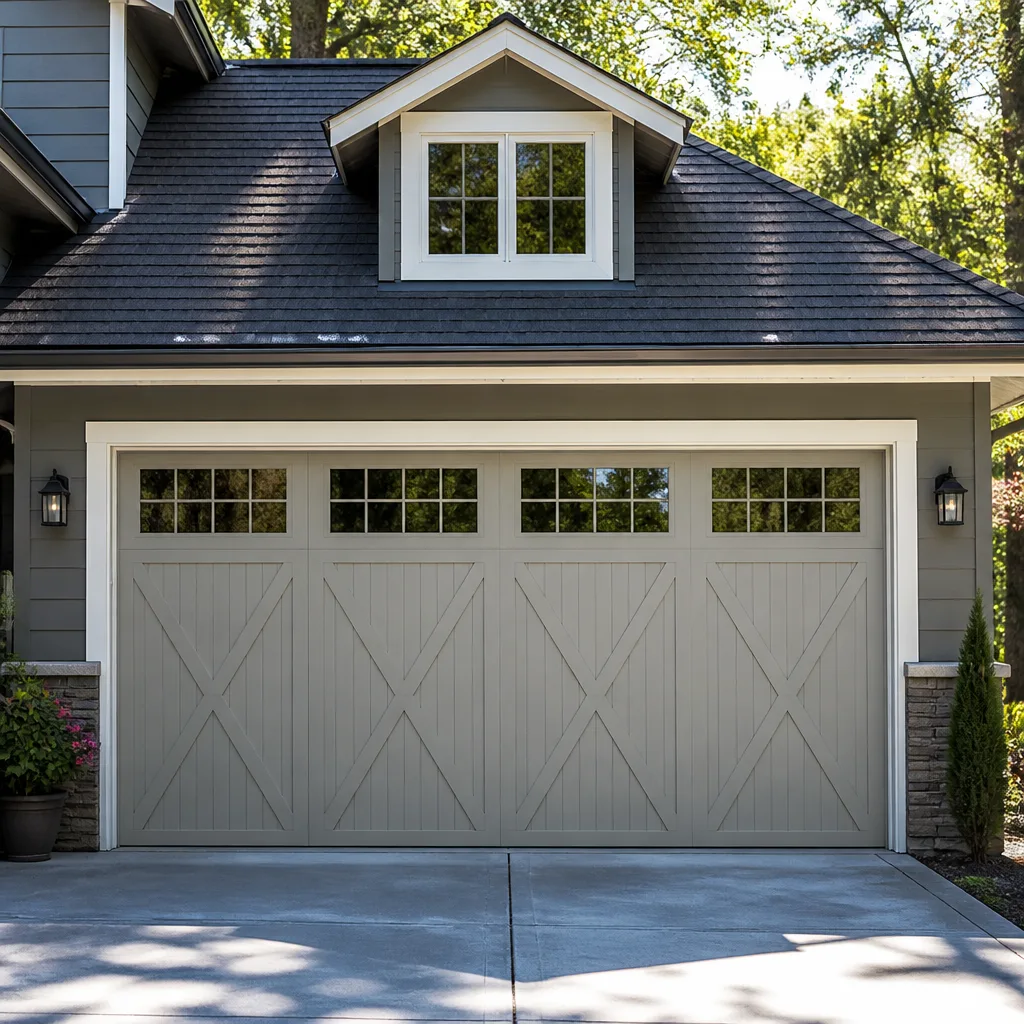 Carriage house
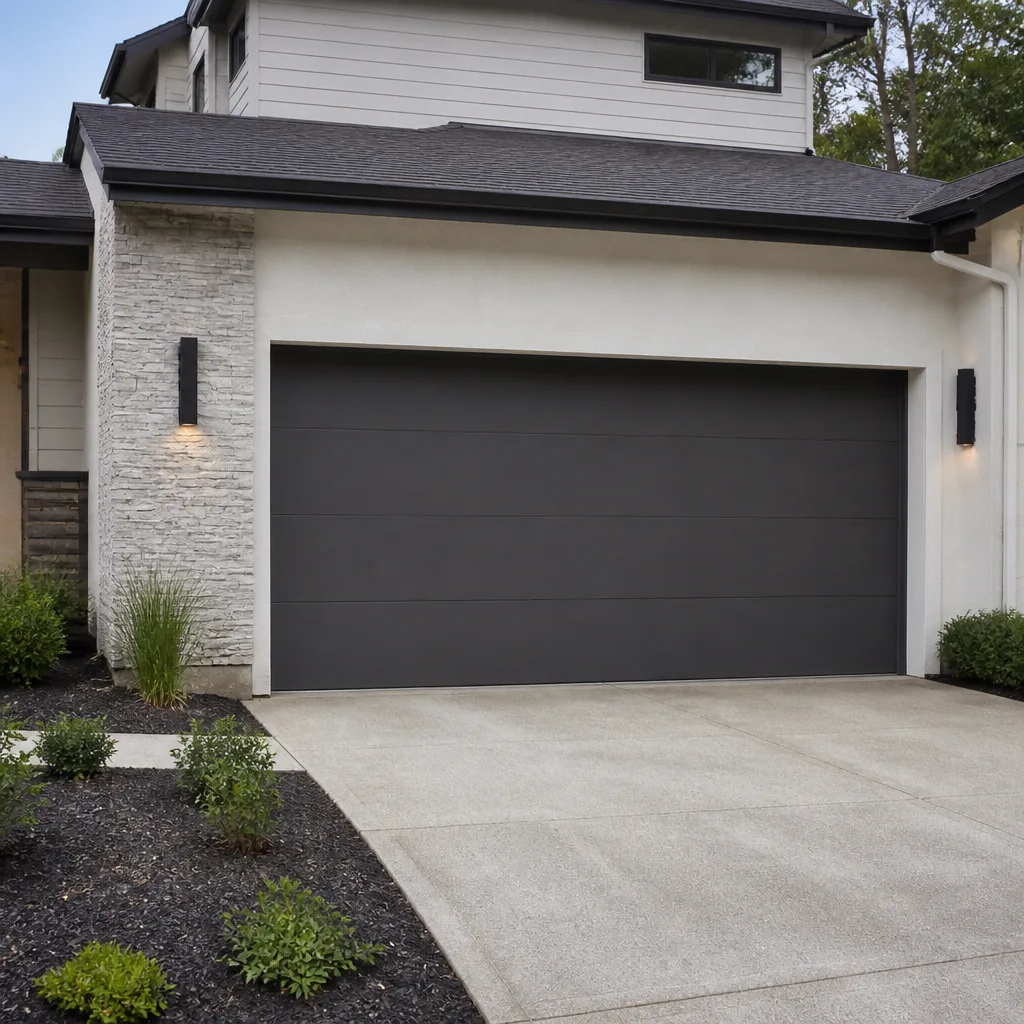 Modern flush
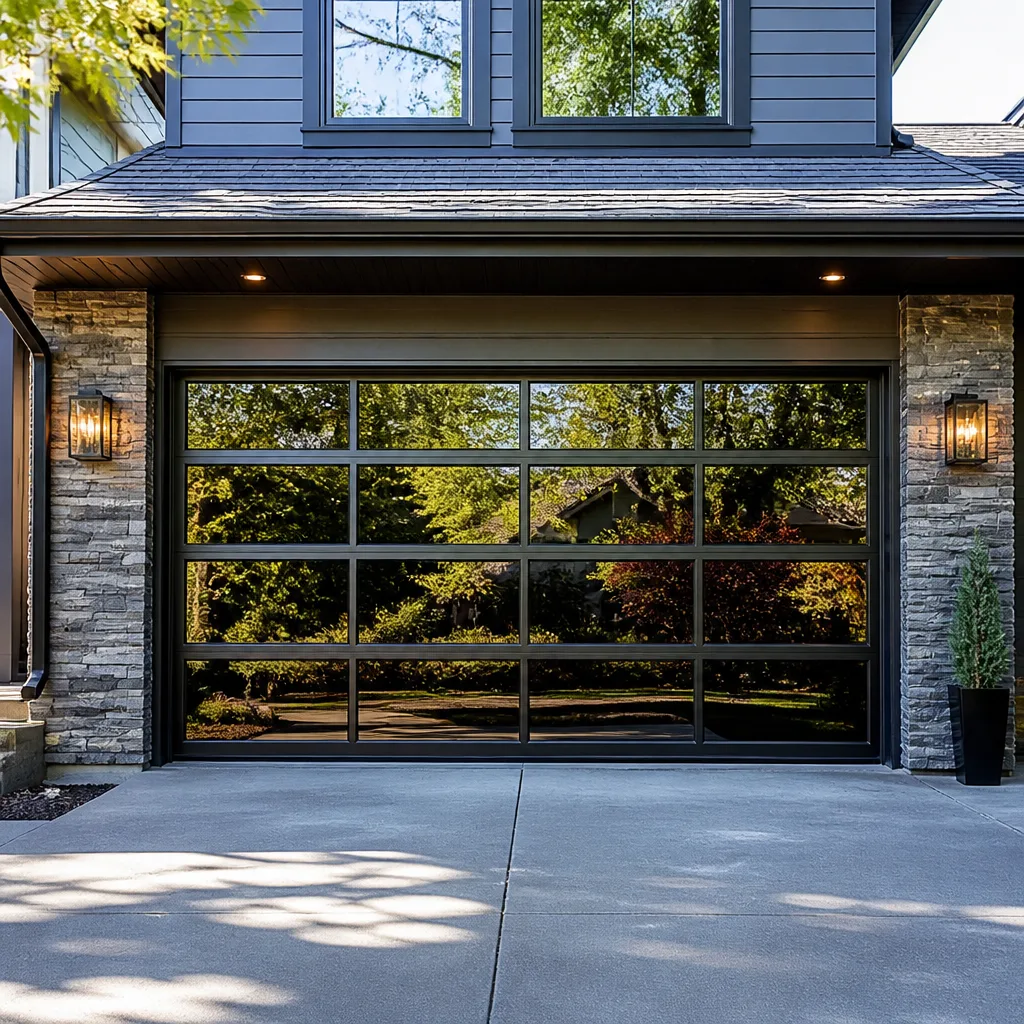 Full-view glass
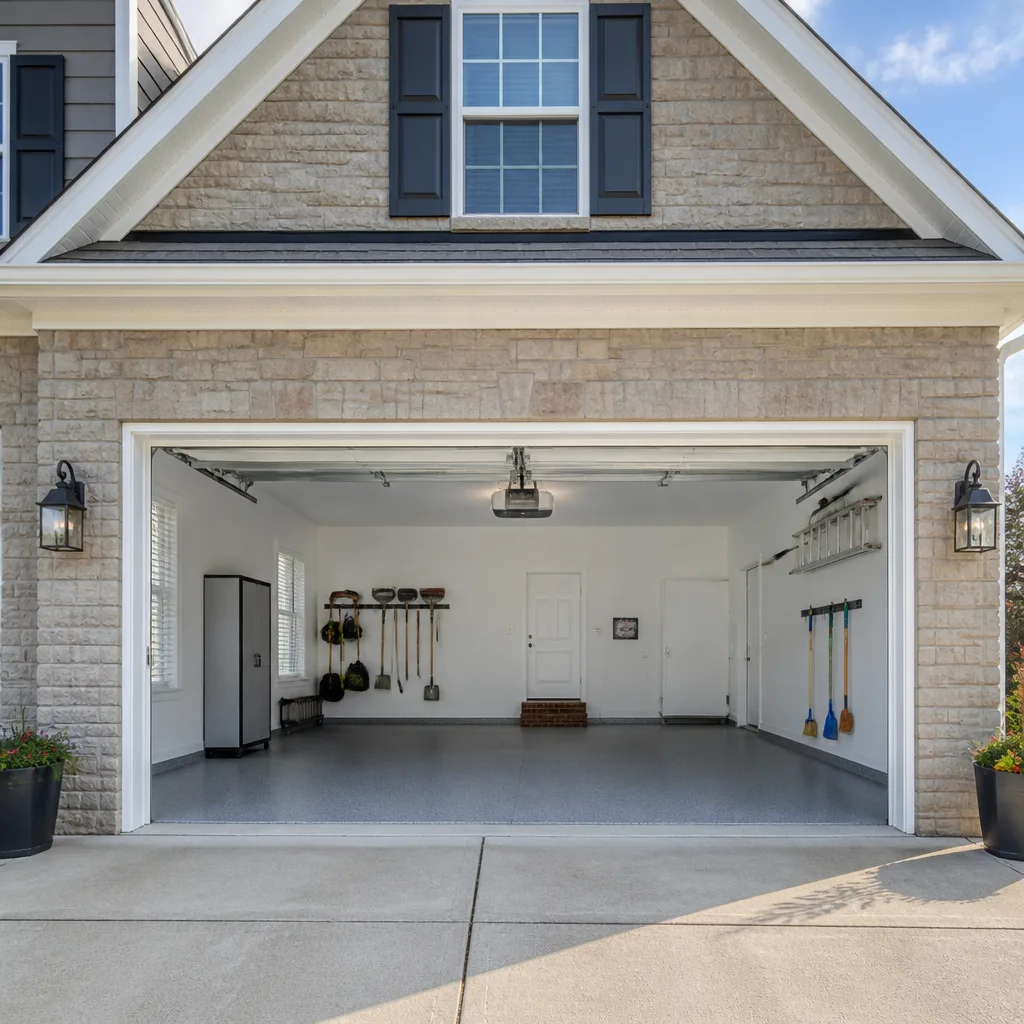 LiftMaster openers
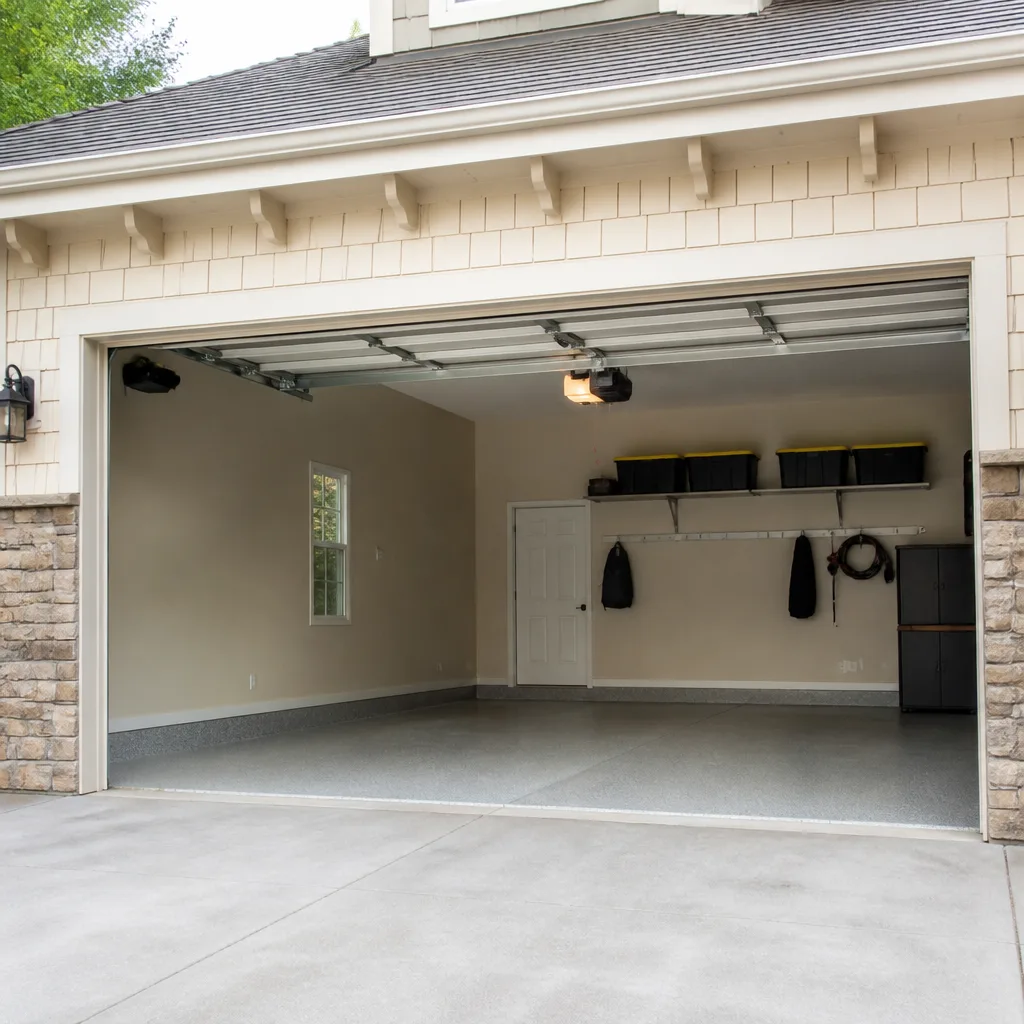 Chamberlain openers
Full 25-point door and opener safety check with every visit - springs, cables, rollers, tracks, and your LiftMaster or Chamberlain opener included
You get a price before we start. It does not change when the pro arrives.
Get your free estimateThe Complete Guide to Garage Doors in Pasadena
Most homeowners don’t think about their garage door until the morning it won’t open, and that’s the problem. It’s the largest moving object in the house, it opens and closes thousands of times a year, and in Pasadena it works harder than its label suggests. The humid Gulf Coast air works on the springs and cables every day, and the area’s clay-heavy soil is rarely kind to a door frame. This guide covers what actually fails here, what each part costs, how to read a wind rating on a spec sheet, and the repair-or-replace decision most homeowners get wrong. We’ve organized it around local conditions rather than the generic advice you’ll find on national sites.
Quick Answer
A garage door in Pasadena needs the same core maintenance as anywhere else, but the local climate shortens the life of springs, cables, and weatherseals, and slab movement here tends to throw tracks out of alignment. Most doors last 15 to 20 years with regular service. When something breaks, repair is usually the right call unless the door is older, dented, or the panels are separating.
Styles & brands we work with
- Raised-panel steel
- Carriage house
- Modern flush
- Full-view glass
- LiftMaster openers
- Chamberlain openers
Table of Contents
- Why a Garage Door in Pasadena Ages Differently
- The Anatomy of a Garage Door: A Component Glossary
- Springs and Cables: The Safety-Critical Parts
- Slab Foundations and Track Misalignment
- Hurricane Ratings and Wind Load: What the Spec Sheet Means
- Openers: Smart Systems and Legacy Units
- Repair or Replace: A Decision Map
- A Maintenance Routine That Fits This Climate
Why a Garage Door in Pasadena Ages Differently
National garage door guides are written for a hypothetical average house. Pasadena isn’t average. The humidity here stays high for most of the year, and that moisture doesn’t just fog the windows. It sits on the steel in your springs and cables, working on every unpainted edge and every stressed coil.
Springs are a good example. An extension spring in a dry climate can last well past a decade. In the Gulf Coast humidity, that same spring often gives out sooner, because corrosion pits the wire and creates weak points where the coil is under tension. Galvanized springs resist this better than plain steel, and a spring made for humid climates is worth asking about when the time comes to replace one.
Slab movement is the second local factor. Much of southeast Texas is built on expansive clay soil that absorbs moisture in wet seasons and shrinks back in dry ones. When the ground under one corner of the slab shifts, the garage framing moves with it, and tracks that were perfectly level at installation can end up a half-inch out of square after a few years. That’s not a defect in the door. It’s the ground underneath it.
Wind is the third factor. Hurricane season runs from June through November, and even tropical storms that stay well offshore can push sustained wind against a garage door for hours. A door that flexes or whistles under that load is telling you something about its anchoring and its panel strength.
None of this makes a Pasadena garage door a lost cause. It just means the maintenance schedule matters, and that the parts most likely to fail first aren’t the ones a generic guide would point to. Our Pasadena Garage Door Repair Pros team sees this pattern in how local doors wear, and it shapes what we recommend.
The Anatomy of a Garage Door: A Component Glossary
Understand the parts and you’ll understand what your technician is saying when something goes wrong. Here’s a working glossary, with typical lifespan expectations tuned to Pasadena conditions.
- Springs. The torsion spring (mounted on a shaft above the door) or extension springs (along the sides) counterbalance the door’s weight. Lifespan here runs shorter than the national average because humidity accelerates corrosion.
- Cables. Steel cables run from the bottom bracket to the spring system and carry the door’s full weight when a spring fails. Cables fray and corrode, and a frayed cable is a serious hazard.
- Rollers. The wheels that ride inside the track. Nylon rollers run quieter and need less lubrication than steel ones, and the humidity here makes a case for nylon if the noise bothers you.
- Hinges and brackets. These fasten the panels together. They loosen over time, and pest damage to the wood framing they attach to is a common local issue.
- Tracks. The rails that guide the door. They’re the component most affected by slab movement in this area.
- Weatherseals. The rubber strip along the bottom of the door and the brush or rubber strips around the sides. In a hot, humid climate, seals crack and lose their shape faster than the door itself.
- Opener and drive system. The motor, rails, and chain, belt, or screw drive that lifts the door. Modern units are WiFi-connected and integrate with home automation.
- Photo-eye sensors. The small sensors near the floor that stop the door when something crosses the beam. Required on every opener by federal safety standard, and the single most common cause of a door that “just won’t close.”
A door that jerks, squeals, or triggers the auto-reverse for no reason is usually telling you which of these needs attention. Our garage door repair work starts with a diagnostic pass on all of them, because replacing one part while ignoring the others rarely solves the problem.
Springs and Cables: The Safety-Critical Parts
Springs are under enormous tension even when the door is closed. That’s the whole point of them: they store the energy needed to lift hundreds of pounds of door. It’s also why they’re the most dangerous part of the system to work on.
When a torsion spring snaps, it releases that stored energy in an instant, with a sound like a gunshot. Extension springs are even riskier without a safety containment cable, because they can fly several feet when they break. If your garage door made a loud bang and the door won’t open, the spring likely failed. Don’t force the door. The weight is now unassisted, and the opener is pulling against a load it was never built to lift.
In our experience, there are clear warning signs to watch for in this climate:
- A visible gap in a torsion spring (they don’t usually reconnect once broken)
- Rust or heavy discoloration on the coils
- Doors that lift unevenly or feel much heavier than usual
- A hanging, frayed, or slack cable
- Gaps between the turns of a torsion spring (an unwinding sign)
What we won’t do here is walk you through replacing a spring yourself. This is one of the few genuinely dangerous jobs in home repair, and it’s exactly why a specialist needs to do it. Springs are dangerous. Leave it to a trained technician. Our garage door spring repair approach pairs each spring on a door with a proper sizing calculation, because an underrated spring fails early and an oversized one strains the rest of the system.
A matched pair of springs is usually the right approach. When one spring has failed, the other has lived the same life and is likely close behind it, so replacing both is generally recommended. A spring quote for a single spring is just that, one spring. A pair costs roughly double the single-spring rate.
Cables are the second component that needs professional attention. They carry the load when a spring breaks and they handle significant stress every time the door moves. A frayed or corroded cable can snap, and it often does so at the worst possible moment. We inspect cables whenever we service a spring system.
Slab Foundations and Track Misalignment
Most homes in southeast Texas sit on concrete slabs, and concrete slabs on expansive clay soil move. It’s not dramatic, and it usually doesn’t threaten the foundation itself. But a quarter-inch of settlement at one corner translates into a garage door frame that’s no longer square, and a door that runs against the track where it once ran free.
The signs of slab-related misalignment are usually quiet at first:
- The door scrapes or grinds at one edge during the last few inches of travel
- The bottom seal lifts on one side when the door is down, or the door doesn’t seal evenly
- The door ratchets, binds, or stops partway and then reverses
- You hear a popping or clicking sound as the rollers pass a specific point in the track
- The tracks look straight to the eye but the door drags anyway
What we don’t recommend here is a homeowner adjusting the tracks with a pry bar. Tracks are held by bolts that need consistent torque across all of them, and a track that’s moved out of the same plane as its neighbors will cause wear on the rollers and the door panels. We re-square the tracks, align them, and check the framing they attach to before we adjust anything. If a hinge is loose because the wood behind it has swelled or rotted, that gets addressed first.
The other slab-related issue is what the door sits on. A driveway that’s settled so that water pools toward the garage can cause moisture to work into the door bottom and seal, and it can also cause the sill where the door meets the floor to rot. A concrete contractor may be the right call alongside a garage door technician in that case. Our garage door opener repair visits often turn into a conversation about the slab and framing when we trace an alignment problem to its source.
Hurricane Ratings and Wind Load: What the Spec Sheet Means
A “hurricane-rated” garage door isn’t a door that survives any storm without damage. It’s a door tested to a specific wind pressure, and the rating is only meaningful when it’s matched to your home’s location and construction. This is the part of the spec sheet most homeowners skip, and it’s the part that matters most in a Gulf Coast county.
Wind ratings are typically stated as a design pressure in pounds per square foot (psf). A residential door might be rated for 50 to 70 psf, while coastal installation requirements can call for higher. The rating reflects what the door and its anchoring system can withstand when properly installed. Just as important: the door’s strength depends on how it’s fastened to the framing. The strongest panel in the world is only as good as the brackets and bolts holding the tracks to the wall.
What a spec sheet doesn’t tell you, and what a technician will check, is how your specific opening is framed and whether the reinforcement kit was installed. Hurricane-rated doors often require additional reinforcement hardware at the center and corners of the opening. A door can be rated for high wind and still fail if the brackets around it are undersized for the load.
If you’re buying a new door in Pasadena, ask three questions before signing:
- What design pressure is this door rated to, and does that rating apply with the hardware specified for my opening?
- What reinforcement does the manufacturer recommend for a garage door on a home of this construction?
- What documentation comes with the door, and does it name the tested configuration?
For new installation, door manufacturers like Clopay and Amarr publish wind ratings for their product lines, and your builder’s plans may specify a rating. If you’re replacing a door and the old one carried a rating, matching or exceeding it is the sensible approach. Your city’s building department can tell you what your area requires, since requirements vary by zone and by construction.
Openers: Smart Systems and Legacy Units
The opener market has split into two camps: modern WiFi-connected units and the older mechanical systems still running in many Pasadena garages, some of them a decade or more old. The good news is that both are serviceable, and both have known failure patterns.
On the modern side, LiftMaster and Chamberlain units (the same company makes both) are among the most common smart openers you’ll find locally. They connect to apps, support notifications when the door opens, and often integrate with home automation. Their common failures are usually a failing logic board, a misaligned sensor, or a firmware quirk rather than a mechanical problem. Genie covers the mid-range, and Craftsman units are common in older homes and usually simpler to repair.
Older openers, especially chain-drive models, wear in predictable ways:
- The drive gear strips, and the motor runs without moving the door
- The chain stretches and begins to skip
- The capacitor fails, and the opener has no power to start
- The safety sensors lose alignment, and the door refuses to close
Before replacing an opener, we recommend diagnosing it properly. A safety sensor issue, a stripped gear, or a capacitor is often a straightforward repair. The “right fix, not the fastest upsell” rule applies here. An opener that’s still mechanically sound and supports the door’s weight doesn’t need to be scrapped because a part is worn.
If you’re upgrading, look for a belt-drive opener for quieter operation, built-in battery backup if you want the door to keep working during a power outage, and a model from a brand your technician services. We cover openers from LiftMaster, Chamberlain, Genie, and Craftsman, which between them account for most of what’s installed in this area. If you’re not sure what you have, a photo of the unit’s label is enough for us to identify it before a visit.
One more thing: the door and the opener have to work together. A heavier door, a door with a failing spring, or a door that’s out of balance will strain any opener, and the strain shortens its life. That’s why we check the door’s balance before replacing the opener.
Repair or Replace: A Decision Map
The largest single decision a homeowner faces is whether to repair or replace a door. Here’s a straightforward decision map using door age, material, and storm history.
When repair makes sense
- The door is under 10 to 15 years old and the problem is mechanical: springs, cables, rollers, tracks, opener
- The panels are sound, without rust-through, splitting, or separation
- The door has been hit once and the damage is limited to a panel or track
- The frame and slab are stable, and the alignment issue is small
When replacement makes sense
- The door is 20 years old or more and has begun to fail in multiple places
- The panels are rusting through or separating, or the bottom edge is rotten
- The door has been in a storm event and shows visible bowing or panel cracking
- The door was never properly rated for the home’s wind exposure, and you’re ready to upgrade
- The door’s style no longer fits the home, and you’re considering a different material anyway
The material matters. Steel doors are the most common in this area, and they resist humidity reasonably well when the paint film stays intact, but once rust gets under the paint at the bottom edge, repairs tend to be temporary. Wood doors are beautiful and can be maintained, but they need more attention in this climate. Aluminum doors resist corrosion but dent easily. Each has trade-offs, and the right choice depends on the budget and the wind requirements of the home.
In our experience, there’s a version of this decision most homeowners get wrong: replacing a perfectly good door because one spring broke. A sprung spring on a 10-year-old, otherwise healthy door is a repair. Don’t let a failed part make the decision for you. The right fix, not the fastest upsell, should be the question on the table.
If you do choose replacement, the process usually moves through these stages:
- Measure the opening and check the framing and slab
- Select the door model, material, and wind rating
- Order the door and schedule installation (this is a measured-and-ordered job, not a same-day one)
- Remove the old door and hardware, prepare the opening
- Install the new tracks, torsion system, panels, and opener integration
- Test the balance, the safety reverse, and the seal, and walk the homeowner through operation
Our team works across Clopay, Amarr, Wayne Dalton, and other major brands, so the choice can be made on the door itself rather than on which brand someone happens to stock.
Common Mistakes to Avoid
- Assuming a loud bang means the opener. In this climate, a bang usually means a spring, not the motor. Start by checking whether the door lifts by hand.
- Forcing a door that won’t move. If the spring has failed, pulling on the manual release or forcing the door can drop it. That’s a call-a-technician moment, not a hands-on one.
- Ignoring a grinding track. Grinding usually gets worse, not better, and eventually wears the rollers and hinges down with it. Address it while a track adjustment is still cheap.
- Buying a door without checking the wind rating. A beautiful door with the wrong design pressure for your area is a liability. Ask before you buy.
- Replacing one spring when both are due. A pair shares the same service life. Replacing only the broken one means the second will likely follow shortly.
- Skipping the annual service on an older door. Lubrication, balance checks, and a safety-reverse test take under an hour and catch problems before they strand the car.
- Hiring a general handyman for springs. Springs are a specialty. A generalist can adjust a track or swap a roller, but spring work requires the right tools, the right sizing, and a trained technician.
See the difference
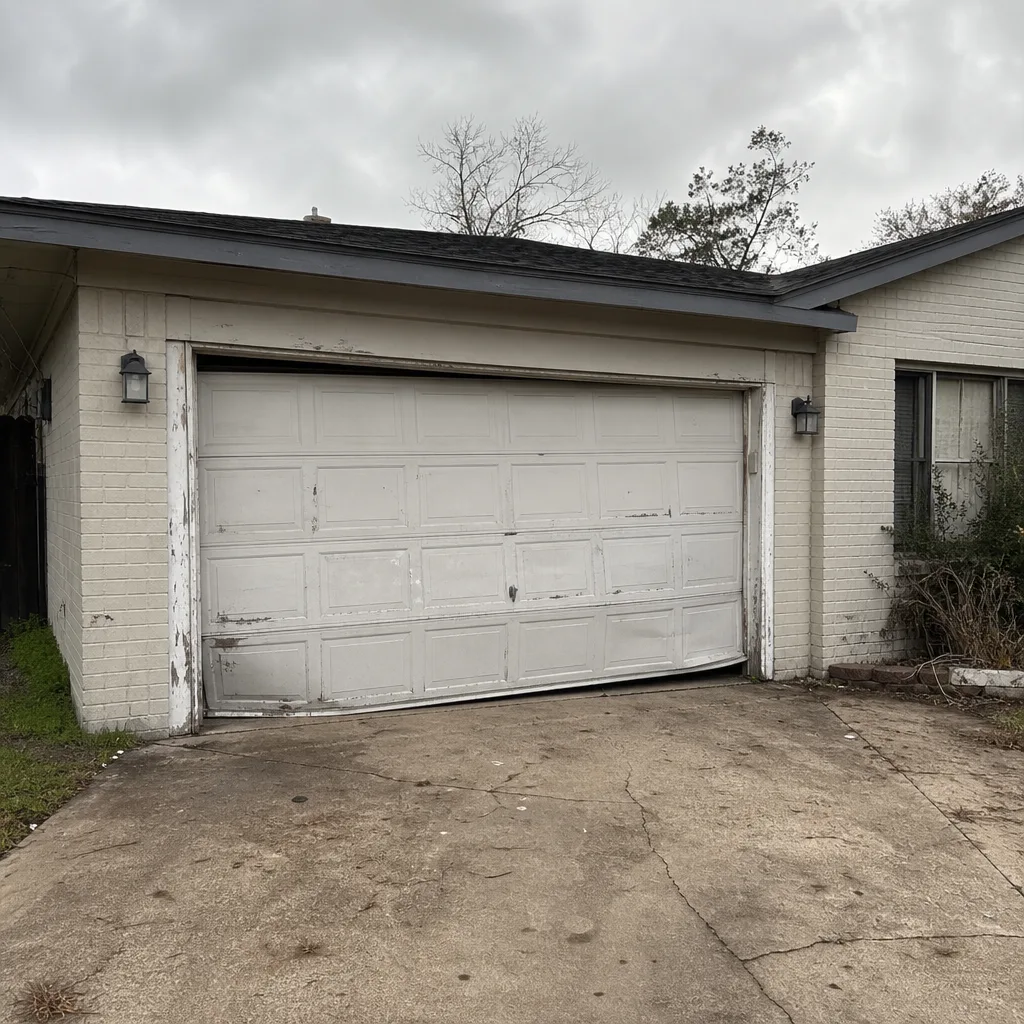 Before
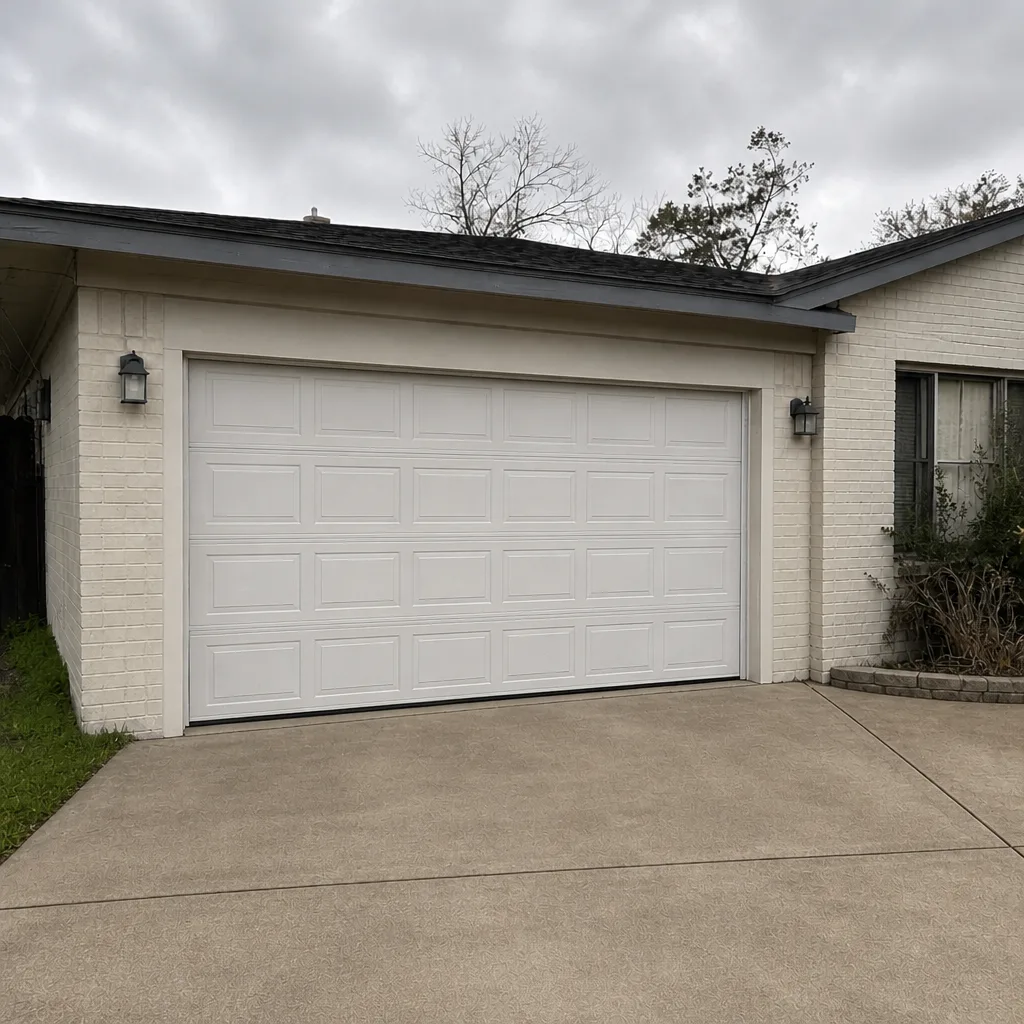 After
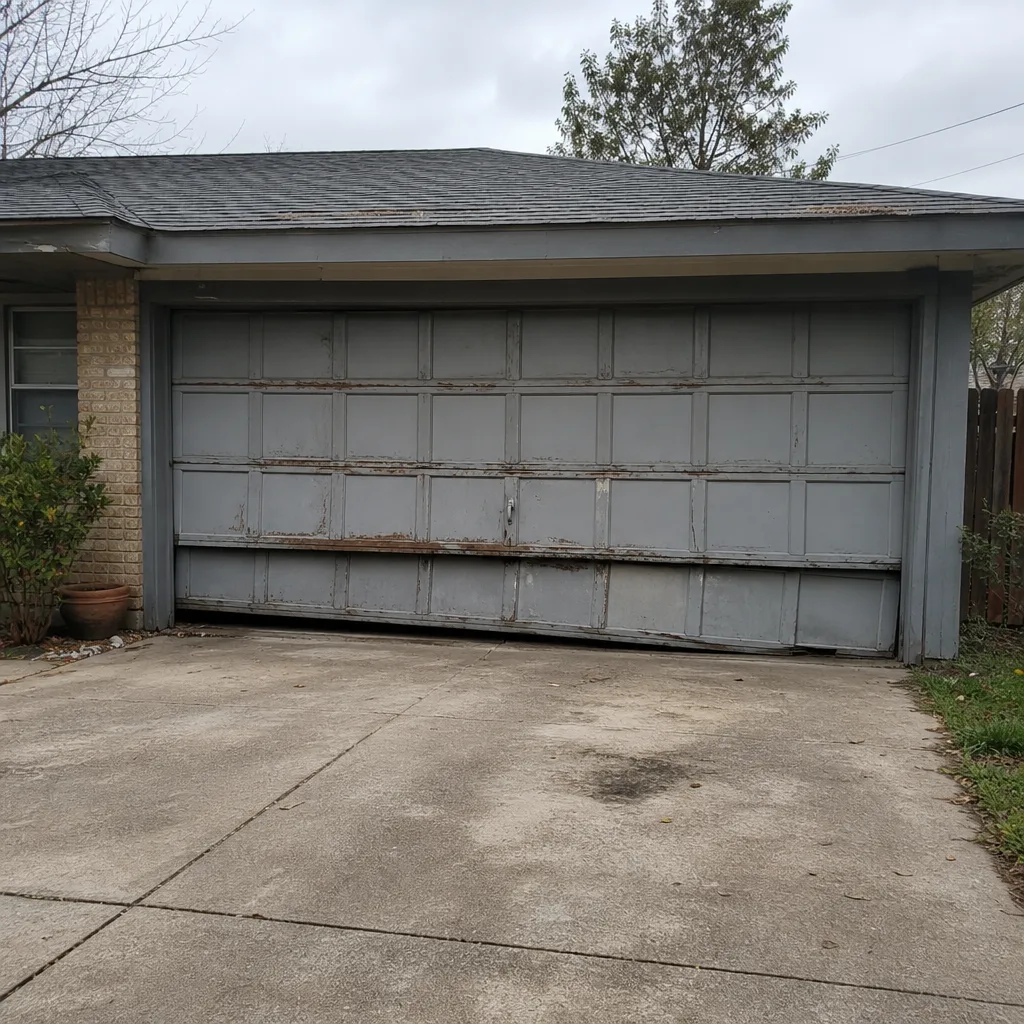 Before
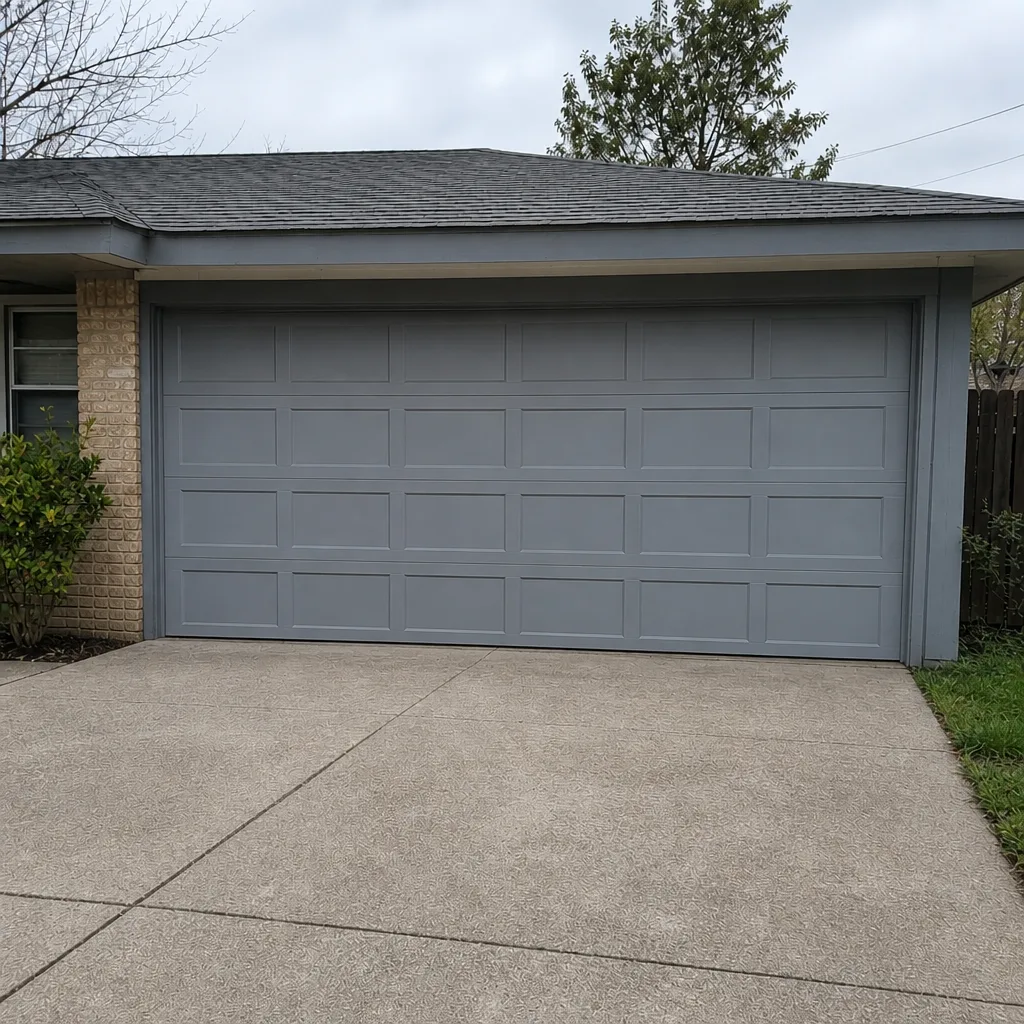 After
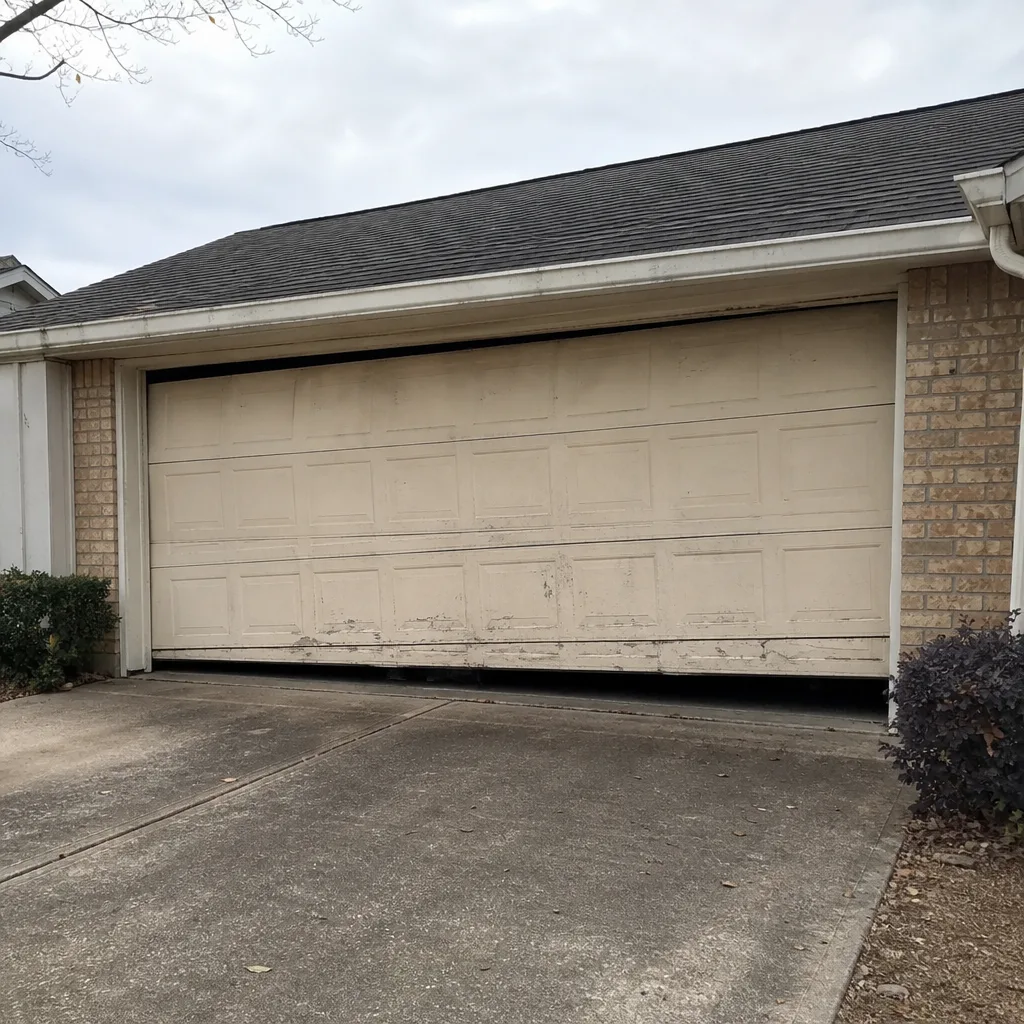 Before
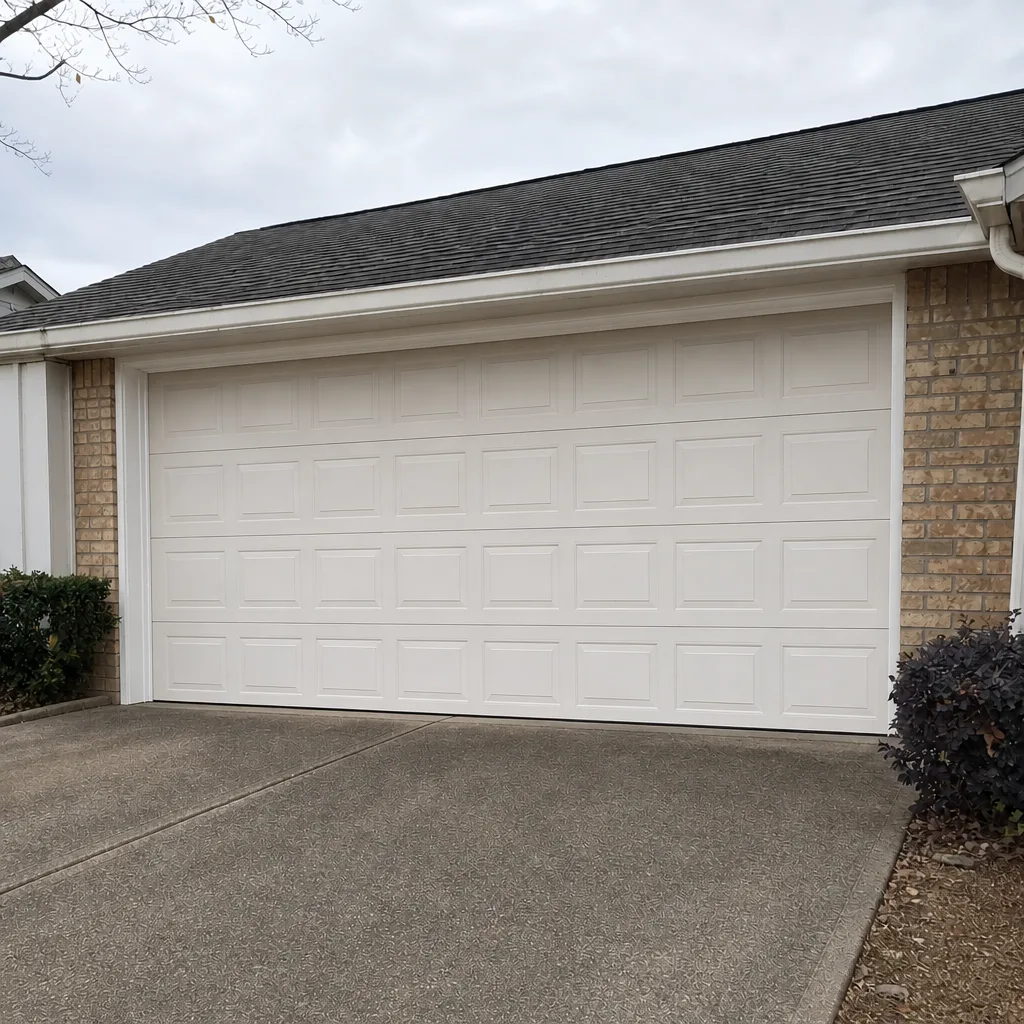 After
Maintenance: A Routine That Fits This Climate
Preventive work pays for itself here because humidity and slab movement both accelerate wear. A simple routine:
- Test the safety reverse every month. Place a small board in the door’s path and confirm it reverses.
- Check the balance once or twice a year. Disconnect the opener and lift the door by hand. A balanced door stays about halfway up on its own.
- Lubricate moving metal parts on a regular schedule. Springs, hinges, and rollers benefit from a proper lubricant in this climate.
- Inspect the weatherseal each spring. Cracked or flattened seals let water and heat in.
- Look for rust on springs and cables, and flag any spotting for the next service visit.
- Listen for changes: new grinding, a different pitch from the opener, or the door slowing down are early warnings.
When something appears on a routine check that you’re unsure about, an inspection is cheaper than a failure. Our garage door repair visits cover the full system, not just the obvious part.
When to Call a Professional
Some jobs are fine for a homeowner with a wrench and a bit of time: swapping a roller, replacing a frayed bottom seal, clearing a spiderweb from the photo-eye sensors, and wiping down the tracks. But certain problems are a call-a-professional moment, full stop.
Call us if the door made a loud bang and won’t open. Call us if a spring has a visible gap, if a cable is hanging loose, if the door runs into the floor or reverses for no reason, if the opener is straining, or if the door has been hit by a vehicle and the panels don’t align. Also call if the tracks have clearly shifted to the point the door binds, since that’s a slab and framing question as much as a garage door one.
Pasadena Garage Door Repair Pros offers free estimates in Pasadena. Call (866) 964-5170. We work on the eight most common garage door and opener brands in the country, we handle spring replacement as a specialty, and we can diagnose a problem you’re not sure about before quoting the fix.
Frequently Asked Questions
Typical repair costs depend on the part and the brand, but most single-component repairs, like a roller swap or a sensor alignment, fall in a modest range, while spring replacement and cable work run higher because they require specialized labor and matched parts. We’ll quote you in writing before any work begins, and the written estimate is the price. Call (866) 964-5170 for an exact quote. Estimates are free.
For emergency spring failures, stuck doors, and openers that leave the car trapped, same-day service is part of what we do. When you call, tell us what happened and what the door is doing. We’ll get a technician routed as quickly as we can, with fast dispatch from 7am to 7pm. Call (866) 964-5170 to get started.
No. The written estimate you receive before work starts is the price you pay for the agreed scope. If the technician finds an additional problem, they’ll present it, explain it, and get your approval before touching it. There’s no surprise line item at the end. Call (866) 964-5170 for a free estimate.
Every technician we connect you with is licensed and insured as their state requires, and they carry the experience to work on whatever system is currently on your door. Our technicians have up to 10 years of experience, and they work on the major brands, not just one. Call (866) 964-5170 to book a visit.
No. Springs are under extreme tension and can cause serious injury when they release unexpectedly. There’s no safe path for a homeowner to do this work. Springs are dangerous. Leave it to a trained technician. Call (866) 964-5170 and we’ll handle it.
It depends on your home’s location, construction, and the requirements your city’s building department sets for your area. A door rated to a design pressure and installed with the right hardware is the safer choice, but the rating only helps if the reinforcement and anchoring are matched to the opening. Our technicians can walk you through the options for your home. Call (866) 964-5170 for a free estimate.
The Bottom Line
A garage door in Pasadena faces a climate and soil profile that most national guides don’t account for. Gulf Coast humidity attacks the springs and cables, slab movement pushes the tracks out of alignment, and hurricane season puts real wind pressure on the door and its anchoring. Knowing the parts, the warning signs, and the repair-versus-replace decision saves money and keeps the door working. When a part fails, get a written estimate before work starts, and don’t let a failed spring convince you to replace a door that still has years left. One call covers diagnosis, repair, and installation, and our team at Pasadena Garage Door Repair Pros is ready to help at (866) 964-5170.
Call Pasadena Garage Door Repair Pros at (866) 964-5170 for a free estimate. We service the brands on your door, from LiftMaster and Chamberlain openers to Clopay and Amarr doors, and we quote the price in writing before any work begins.
Written by the team at Pasadena Garage Door Repair Pros.